Emergency Garage Door Repair Near Me: What Great Neck Homeowners Should Do First
When a garage door won’t open and the car is trapped inside, the next 15 minutes matter more than the next 15 hours. In that window you decide whether to pull the release cord, whether to force the door, and whether to leave it standing half-open. Those three choices change what the repair looks like. A garage door failure in Great Neck is a decision tree, not a single problem. Here’s the order we’d work through it, before you call anyone.
First, Stop and Answer One Question: Is the Door Safe Right Now?
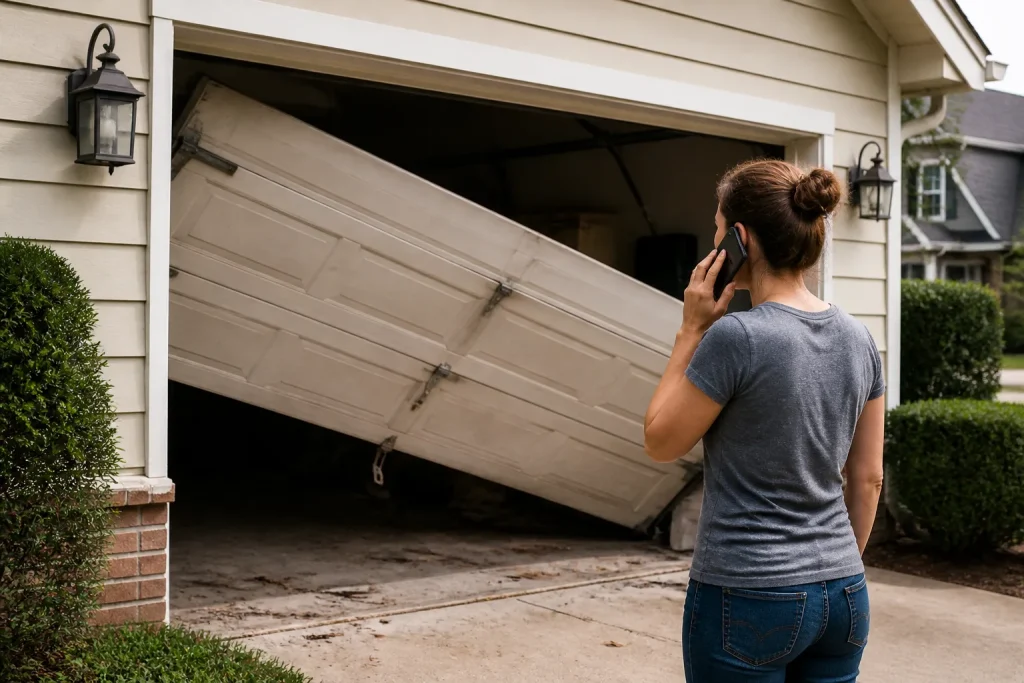
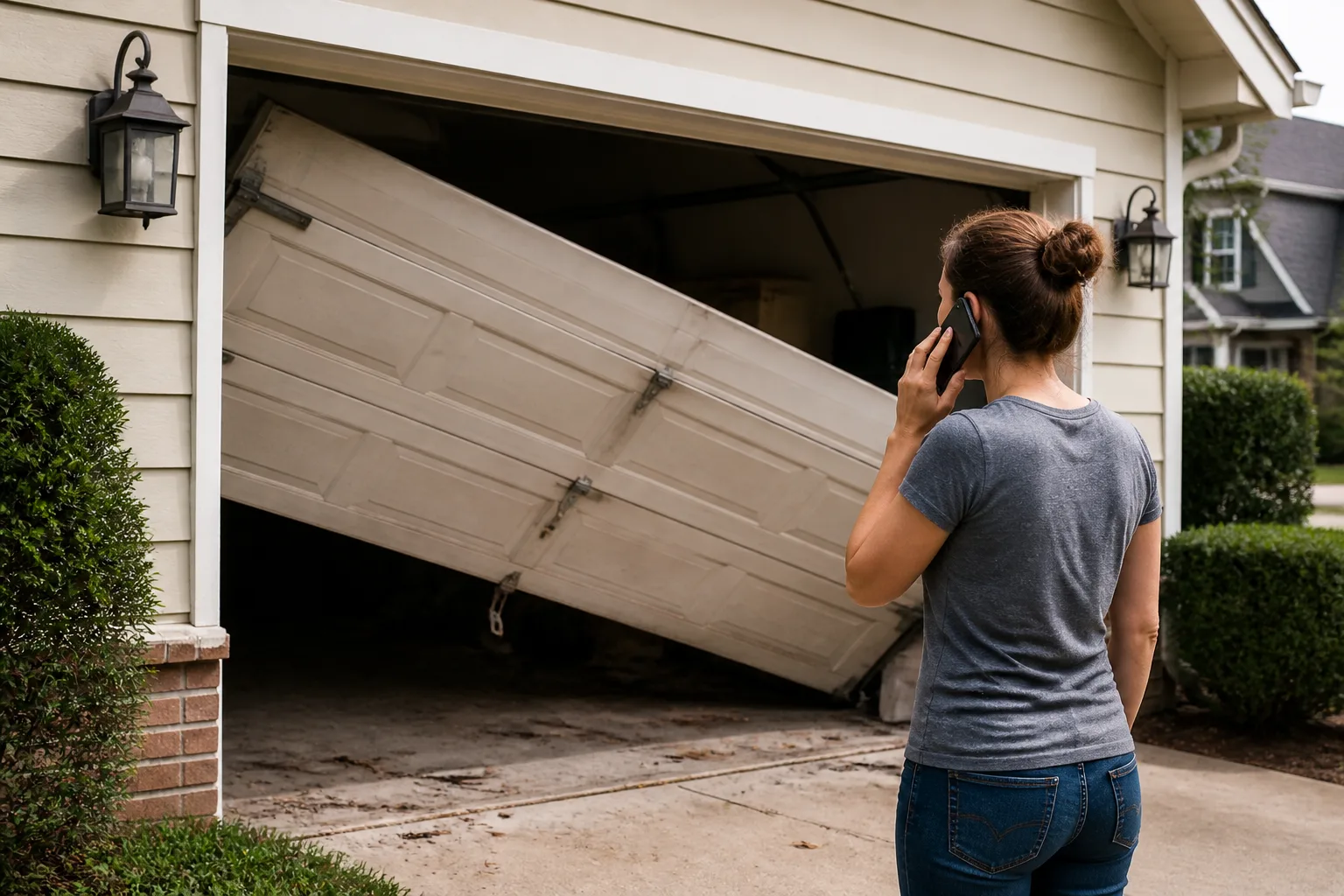
Before you touch anything, work out whether the door is a hazard or a security gap. A garage door in Great Neck usually fails one of two ways: it’s stuck down and everything is contained, or it’s hung open and your house is exposed to the street and to the weather. Those lead to different actions. If the door is closed and staying closed, you have time to diagnose and schedule. If it’s stuck open and you can’t get it down, the priority is securing the opening and getting someone out to close it, because an open garage in Great Neck is an active access point to your home. Do not try to slam a runaway door down by hand. If the door is hanging off a track or cocked at an angle, keep people and vehicles clear of it and call for emergency service. A door under load from a broken spring can drop fast and hard. That’s the moment a safety call outweighs a quick fix.
How the Emergency Release Cord Works, and When Pulling It Is a Mistake
That red cord hanging from the opener trolley is a manual override, and it’s the single most misunderstood part of an emergency. Pulling it disengages the door from the opener so it can be lifted by hand. Here’s the problem: if a torsion or extension spring has broken, the door loses the counterbalance that makes it light. A garage door can weigh well over a hundred pounds, and without spring tension it will not lift the way you expect. Pull the release on a broken-spring door and you’ve now got a dead weight in the air that can crash down when your grip falters. So the rule is simple: find out why the door stopped before you pull the cord. If the opener is dead but the springs are intact, the release is safe and effective. If you hear the loud bang or snap that signals a broken spring, leave the release alone. That’s a trained-technician job, not a homeowner one. We handle spring repair as a core service precisely because it’s dangerous work. If you’d rather not sort that out yourself and want us to walk you through it, call (877) 792-6350.
Classify the Failure by Symptom So You Know What You’re Dealing With
The symptoms point directly at the cause. Get the diagnosis roughly right and you’ll know whether your Great Neck door can sit as-is or needs urgent attention. Here’s how we sort it:
- Loud bang from above, door won’t move: most likely a broken torsion spring. The door will feel extremely heavy if you try to lift it. Leave it in place and call for service. Do not run the opener.
- Door sits lopsided, one side sagging: usually a snapped or slipping cable. The door is unbalanced and unsafe to move by hand. Call a technician.
- Opener runs but nothing moves, or the door reverses instantly: opener problem, or the safety sensors are misaligned or blocked. If your operator is a LiftMaster, Chamberlain or Genie, that’s the kind of hardware we diagnose every day. Check the sensors first; often that’s the whole story.
- Door came off the track or is grinding at an angle: a track jump. Don’t force it back; you’ll bend the track and turn a small fix into a bigger one. Keep the doorway clear and call.
Match the symptom to the list, and the answer to “can I leave this alone?” often becomes obvious. Track jumps and broken springs are not safe to leave open if the door hangs over an entry.
What “Emergency Garage Door Service” Actually Means Logistically
Emergency service isn’t magic; it’s a process, and how you set it up when you call Great Neck Garage Door Repair Pros decides how fast you get back to normal. When you reach dispatch, the useful things to pass along are the symptom (bang, sag, grinding, won’t close), the brand of door or operator if you know it, whether the door is stuck open or closed, and whether anyone is blocked in. Accurate symptom reporting matters: it tells us whether to prepare for a spring job or an opener diagnosis and lets the technician show up with the right parts. A vague “it’s broken” sends them guessing. A specific “it snapped and it’s hanging on one side” gets a trained tech ready to work. Arrival windows depend on whether your door is an active security gap or a contained failure, so be honest about urgency. If the door is open to the street, say so. We’d rather know upfront and prioritize correctly than find out on arrival.
The Three Panic Moves That Make the Repair More Expensive
We’ve seen the same mistakes turn a routine Great Neck repair into a costly one. Avoid all three.
- Forcing a jammed door. Pushing or pulling hard against a stuck door bends panels, snaps rollers, and can make a straight track into a job that needs the door replaced. The door is telling you something is jammed. Listen to it.
- Repeatedly triggering the opener on a broken spring. If the spring is gone, the opener motor is now lifting raw weight. Run it again and again and you’ll burn out the motor, strip the drive gear, or wreck the logic board. One try is fine. A dozen cycles turns a spring repair into a spring plus opener repair.
- “Temporarily” securing a half-open door with chairs, boxes or a broom handle. Looks fine until it doesn’t. A prop gives way, the door drops, and now you’ve got a damaged threshold, a smashed panel, or a person underneath. If the door is open and unsafe, keep the area clear and call.
The through-line is simple: when you’re unsure, stop forcing, stop cycling, and get a qualified call out. A free estimate from us means you’ll get a straight answer on what’s wrong and what it takes to fix it before anyone starts work.
What to Have Ready So the Next Emergency Starts Ten Minutes Ahead
Most of the stress in a garage door emergency comes from not knowing things you should’ve known already. Get these in order now, while the door still works, and the next failure gets easier.
- Know where your manual release cord is. Test the disengagement gently when the door is fine, so you understand the glide of it. Then leave it be unless it’s a genuine need.
- Write down the opener model number. It’s on the back of the unit, or on a sticker inside a battery cover. It’s the single most useful detail you can hand a technician. LiftMaster, Chamberlain, Genie, Raynor: the model gets the right diagnostic and the right parts on the first visit.
- Keep a specialist’s contact saved. Not an app, not a general handyman. A garage door specialist. In Great Neck, that’s the number you want one tap away.
- Note the brand of your door. If it’s a Clopay, Amarr, Wayne Dalton or another make, that tells us what panels and hardware we’ll be working with.
Ten minutes of prep means when a door fails, you’re diagnosing, not researching. If the door is already failing and you need help now, our team can take the call and get someone out.
When to call a pro: broken springs, snapped cables, track jumps, and doors hanging open are all technician territory. The dangerous ones are the springs; a door under a broken spring can drop without warning. There’s no good reason to put your hands in a high-tension system. Related services in Great Neck: garage door repair covers the day-to-day fixes, and garage door opener repair covers the motorized half of the problem. If the door panel itself is beyond saving, garage door installation handles the replacement from measure to finish.
The Bottom Line
The first few minutes after a garage door fails set the tone for everything that follows. Keep this mental checklist: don’t force a jammed door, don’t cycle the opener if you suspect a broken spring, don’t leave a door hanging open as an ongoing security problem, and know which symptoms mean “wait” versus “get help now.” The emergency release cord is your friend when the springs are healthy and a liability when they’re broken. Learn the difference, keep your opener model number handy, and save a specialist’s contact. If you’re in Great Neck and need help, Great Neck Garage Door Repair Pros offers free estimates – call (877) 792-6350. We work on the door you already have, whatever brand it carries, and get you back in service today where we can. One call covers everything your garage door needs.
Frequently Asked Questions
Is it safe to pull the emergency release cord on my garage door? It’s only safe if the spring system is intact. If the spring is broken, the door has no counterbalance and will be too heavy to lift safely by hand, and it can crash down. When you’re not sure why the door stopped, don’t pull the cord. Call a technician and describe the symptom.
How much does emergency garage door repair in Great Neck usually cost? What can I expect for a same-day call? Pricing depends on what’s actually wrong, which is why we give a written estimate before any work starts, so the quoted number is the number you pay. For an urgent Great Neck call, a free estimate is the fastest way to get an exact figure. Call (877) 792-6350 and describe the failure clearly, and we’ll tell you what it takes.
My door is stuck open and won’t close. Is that an emergency? Yes, in most cases, because an open garage leaves your home exposed to the street and to weather. Keep the opening clear and call for emergency service. If it’s stuck down and contained, you have more time to schedule.
Can I keep using the opener if a spring broke? No. Once the spring goes, the motor is lifting the full weight of the door, and repeated use will burn out the opener or strip its drive gear. Stop using it and call a professional; trained technicians handle high-tension spring systems safely.
Written by the team at Great Neck Garage Door Repair Pros.
Need Garage Door Help?
Call Great Neck Garage Door Repair Pros - the local pro we connect you with is licensed and insured, here with fast after-hours help in Great Neck.
(877) 792-6350