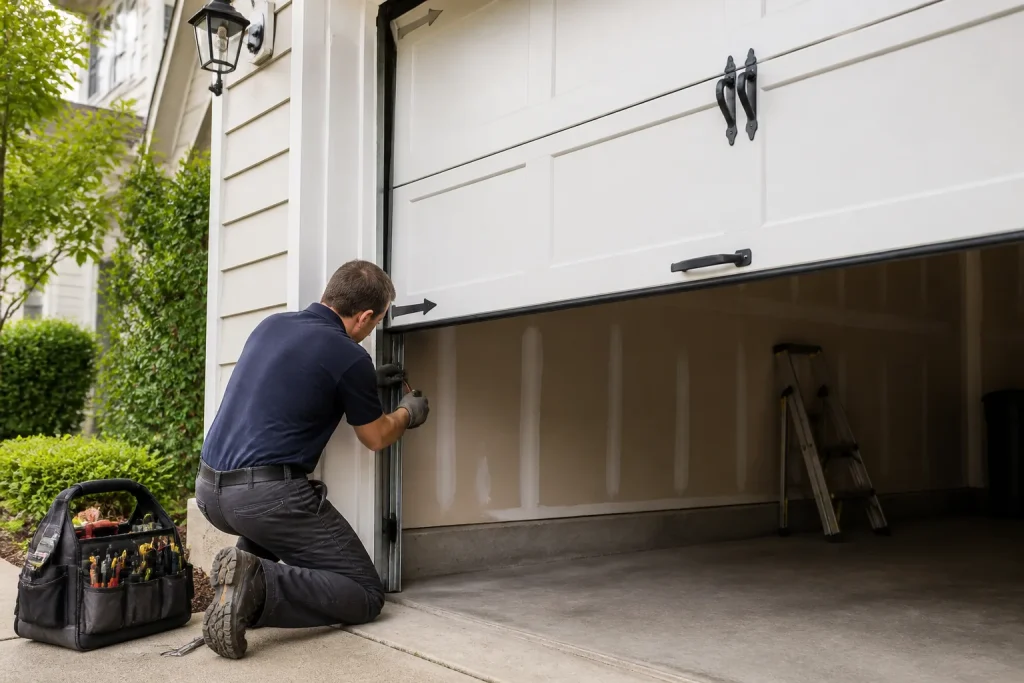
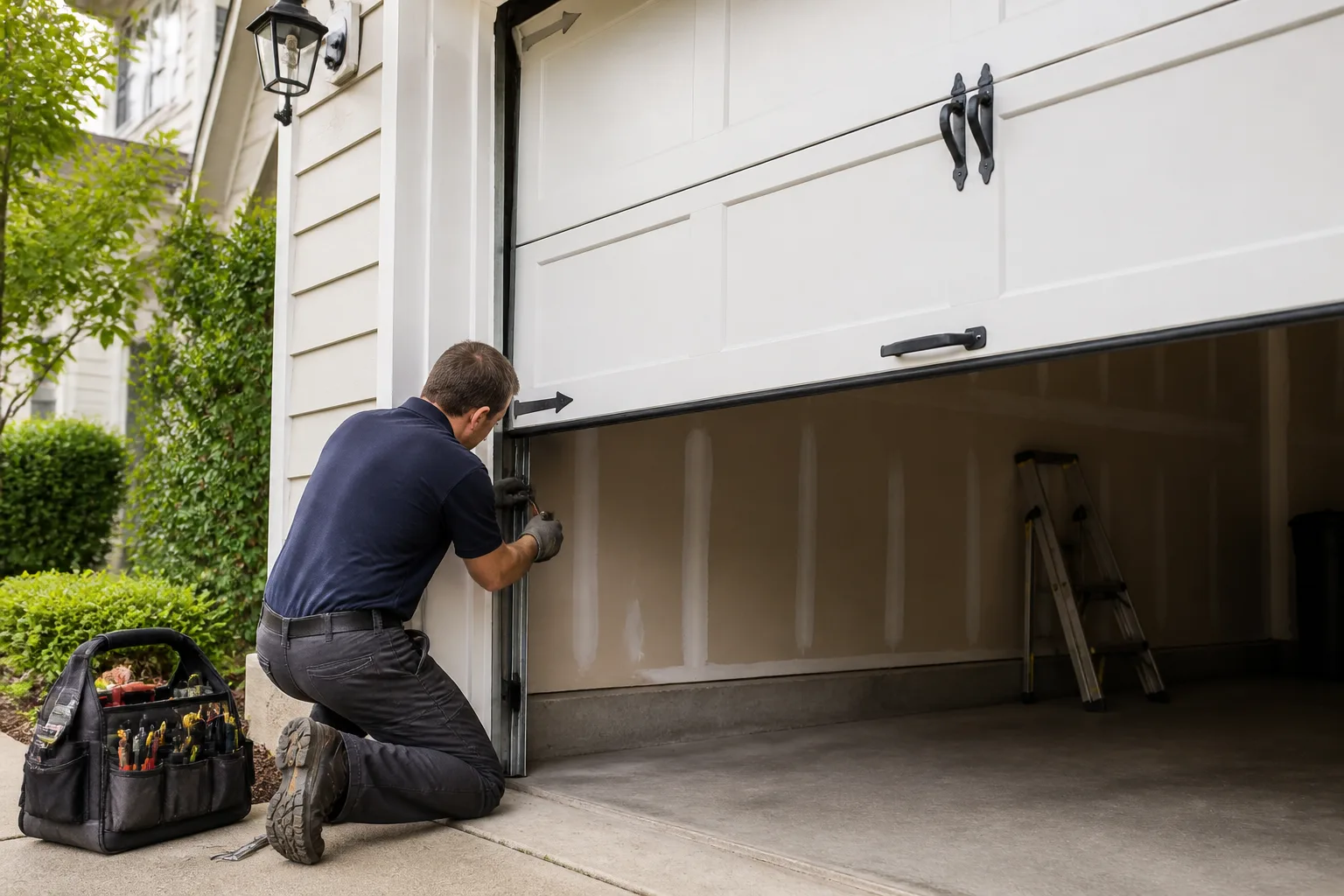
Garage Door Repair: Repair or Replace? How Great Neck Homeowners Decide
Most garage door advice starts with the calendar. A door hits a certain age, the thinking goes, and it’s time to replace it. That advice is simple, tidy, and often wrong. We’ve watched homeowners in Great Neck replace perfectly serviceable doors after one broken spring, and we’ve watched others sink money into doors that were already past saving. The real decision has almost nothing to do with age and everything to do with what’s failing, what’s next to fail, and how the repair math stacks up against the cost of a new door.
Key Takeaways
- Age alone is a weak signal; failure pattern is the strong one. A door that just had its first spring failure is in a different place than one on its second in three years.
- Some parts (springs, rollers, cables) have predictable replacement cycles. Others (cracked panels, warped track, rot at the bottom section) point to systemic decline.
- The 50% rule is a useful starting point, but the threshold shifts with door type, usage, and material.
- Repair is almost always right for a single spring or cable failure on a structurally sound door.
- A trustworthy specialist will show you the problem and talk you out of a sale when a repair does the job. If you’d rather not weigh this alone, call (877) 792-6350 for a free assessment.
Why age is the wrong way to think about this
A garage door is not a single object. It’s a stack of parts on different clocks. The panels might last decades. The springs typically give out far sooner. Rollers, cables, hinges, and the opener each live on their own timetable. When someone asks whether a 15-year-old door should be repaired or replaced, the honest answer is that age tells you surprisingly little. What matters is where each component sits on its own curve.
Think of it this way. A door that just had its first spring failure at 15 years is doing what springs are supposed to do. Replace the spring, check the rest, and you likely have years of service ahead. A door that’s on its second spring failure in three years is telling you something different. Springs wear faster under heavy use, poor balance, or a door that’s fighting its own hardware. A repeat failure is a symptom, not bad luck. The repair that fixes a symptom doesn’t fix the cause, and that’s where replacement math starts to change. In Great Neck, where many garages see daily in-and-out use, that distinction matters more than the number on the door.
A component-lifespan model: what has a predictable cycle and what signals decline
The cleanest way to decide is to sort every problem into two buckets. One bucket holds wear items with a known lifespan. The other holds failures that point to the whole system. Everything else follows from which bucket your issue lands in.
Parts with predictable replacement cycles
- Springs. Torsion and extension springs are consumable. They wear out and get replaced. One broken spring on a sound door is a routine repair, not a replacement event.
- Rollers. Worn rollers cause noise, wobble, and uneven travel. Swapping them is a maintenance task, not a verdict on the door.
- Cables. Cables fray and stretch. A single cable replacement on a door with intact panels is straightforward.
- Hinges and bearings. These wear and get renewed. None of them drive a replace decision.
Failures that signal systemic decline
- Panel cracking. Cracks that spread across panels, especially near hinges or the bottom section, suggest the door is losing structural integrity rather than a single part failing.
- Track warping. Bowed or bent track that keeps pulling out of alignment, even after adjustment, points to mounting or structural issues that a repair won’t hold.
- Rot at the bottom section. Water pooling at the threshold eats the bottom panel on wood and some composite doors. Once rot climbs the frame, you’re chasing it, not fixing it.
If your problem sits in the first bucket, repair is usually the answer. If it’s in the second, replacement deserves a real look. Many doors fall in between, and that’s where the 50% rule comes in.
The 50% rule, with Great Neck cost context
The 50% rule is simple: once cumulative repair costs approach half the cost of an equivalent replacement door installed in Great Neck, the new door starts to win the math. It’s a useful guide, but it’s not a fixed line. It shifts depending on what you’re repairing and how the door is used.
Here’s how the threshold moves. On a basic steel door with heavy daily use by a busy household, that 50% line comes up faster, because a new door’s value compounds over every trip it makes in and out. On a premium or custom door with lighter use, the threshold is higher, since a comparable replacement costs far more and a good repair can preserve value for years. That’s why you can’t apply the rule in the abstract. You apply it to your specific door, your specific repair history, and what a new door of the same class would actually cost installed.
Putting it to work
- Add up everything you’ve spent on the door over the last few years, plus what this repair will cost.
- Get a realistic installed price for an equivalent new door, not the cheapest one on the market.
- If repairs are approaching half that installed figure, and more failures are likely, replacement starts to make sense.
- If repairs sit well below that line, keep the door and renew the wear items.
One caveat: a repair that resets the clock on a whole wear category (for example, replacing all the rollers and springs at once) can be cheaper than a new door and give you a fresh run of years. Do the math on the renewal scenario too, not just the single repair.
When replacement is the clear answer
Some situations don’t need a spreadsheet. They need a decision. Replacement is usually the right call in these cases:
- A damage pattern that affects structural integrity. Multiple cracked or separated panels, a bottom section that’s sagging away from the frame, or panels that no longer interlock reliably. You can patch symptoms, but the door as a whole is compromised.
- A door that no longer meets current wind-load code in a coastal Virginia market. Codes for wind resistance can change over time, and an older door may not meet what’s required today. If your door’s rating is out of step with current local requirements, a repair won’t change that. Check with Great Neck’s building department on what applies to your property.
- A custom wood door with active moisture damage in the frame. Rot in the frame behind the door is a structural problem. Once it’s active, repairs on the door itself won’t solve it, and you’re looking at a new door and frame work together.
In each case, the reason isn’t cost. It’s that repairing the visible symptom leaves the underlying problem in place. A new door, sized and hung correctly, addresses it at the root.
When repair is almost always right
The opposite cases are just as clear. Repair is the sensible answer for:
- A single spring or cable failure on a structurally sound door. This is routine work. The panels, track, and frame are fine, so you’re renewing a wear item, not rescuing a failing system.
- Opener failure on a door with intact panels and hardware. The door is fine, the operator isn’t. Opener diagnostics and repair usually solve it, and we service the major systems, including LiftMaster and Craftsman units, so your existing setup gets looked at properly rather than swapped out by default.
- Minor track misalignment with no secondary damage. A knock out of alignment, without bent track or damaged panels, adjusts back into place. Nothing else needs to change.
In our experience, most repair calls in Great Neck fall into these categories. A door that’s structurally healthy with one failed part doesn’t need replacing, and reading it as if it does is how homeowners end up spending money they didn’t need to. Spring repair and cable work are the kinds of jobs that get a door back in service cheaply, provided the rest of the system is sound. For more on the repair side, our garage door repair page covers the common failures we see.
When to call a pro
Springs and cables are under extreme tension, and adjusting them is one of the most dangerous things a homeowner can attempt. We treat this as safety-critical work and recommend a trained technician every time. If a door is stuck open, stuck down, or won’t close, that’s a security issue as much as a mechanical one, and it’s worth a call. Our team handles emergency service for exactly these situations.
Related services in Great Neck: if the diagnosis points to the operator rather than the door, our garage door opener repair page explains what we check first. If the decision lands on replacement, our garage door installation page outlines how we size and order the new door.
How to get a neutral assessment
The hardest part of this decision is trusting the person giving you the recommendation. A specialist who’s steering you toward a sale will sound different from one who’s helping you decide. Here’s what the two conversations look like.
A helpful assessment starts with a look, not a pitch. The technician examines the springs, rollers, cables, track, panels, and frame, and then explains what’s a wear item and what’s a systemic issue. They show you the problem. They tell you what a repair buys you in years, and they’re comfortable recommending a repair when a repair does the job. If replacement comes up, it’s tied to a specific reason, such as structural damage or a code concern, not to age alone.
A conversation being steered toward a sale usually skips the bucket discussion. Everything is framed as “it’s old, replace it,” the diagnosis is vague, and the door is presented as a package deal before anyone has examined the individual parts. If you can’t get a straight answer to “what specifically is failing, and what would a repair cost,” that’s your signal.
We’re a garage door specialist, and that single focus is why the conversation tends to be simple. Every tool and part on the job is for garage doors, so there’s no incentive to steer you toward work outside the trade. We know the hardware on your door, including Wayne Dalton and Raynor systems, and we work on the door you already have before suggesting you replace it.
The Bottom Line
The repair-or-replace decision comes down to failure pattern, not door age. Sort your problem into the right bucket. Wear items with predictable cycles mean repair. Systemic failures, structural damage, or code concerns mean replacement deserves a serious look. The 50% rule sharpens the call, especially around Great Neck, but it’s a guide, not a legal verdict, and it shifts with door type and usage. If you’re unsure which bucket your door is in, get a neutral assessment from someone who will show you the problem and tell you plainly whether a repair does the job.
If you’re in Great Neck and need help, Great Neck Garage Door Repair Pros offers free estimates, and we’ll give you a straight answer, even when it’s “you don’t need a new door.” Call (877) 792-6350. If you’d like to see how we approach the trade overall, start at Great Neck Garage Door Repair Pros.
Frequently Asked Questions
Repair the door if the problem is a wear item like a spring, cable, or opener on a structurally sound door. Consider replacing it if you have multiple cracked panels, warped track that won’t hold alignment, rot in the frame, or a door that no longer meets current wind-load code. The failure pattern is a better guide than age. Call (877) 792-6350 for a free assessment if you’re not sure which applies.
It’s a useful starting point, not a hard rule. Once cumulative repair costs approach half the installed cost of an equivalent new door, replacement math starts to favor the new door. The threshold shifts with door type and usage, so a basic steel door under heavy daily use hits that line faster than a premium door used lightly. Get real numbers for both sides before deciding.
Usually not. A first spring failure at 15 years is a normal wear event, not a sign the door is failing. Replace the spring, have the rest of the hardware checked, and the door likely has years left. A door on its second spring failure in a short window is a different story, because that pattern suggests an underlying cause worth investigating.
A good one will. A neutral assessment shows you what’s failing, explains which parts are wear items and which are systemic, and recommends a repair when a repair does the job. Be cautious if the diagnosis is vague or leans on age alone. Our technicians have up to 15 years of experience, and we’re happy to talk you out of a sale you don’t need. Call (877) 792-6350 to get an honest look at your door.
Written by the team at Great Neck Garage Door Repair Pros.
Need Garage Door Help?
Call Great Neck Garage Door Repair Pros - the local pro we connect you with is licensed and insured, here with fast after-hours help in Great Neck.
(877) 792-6350