Last updated November 21, 2026
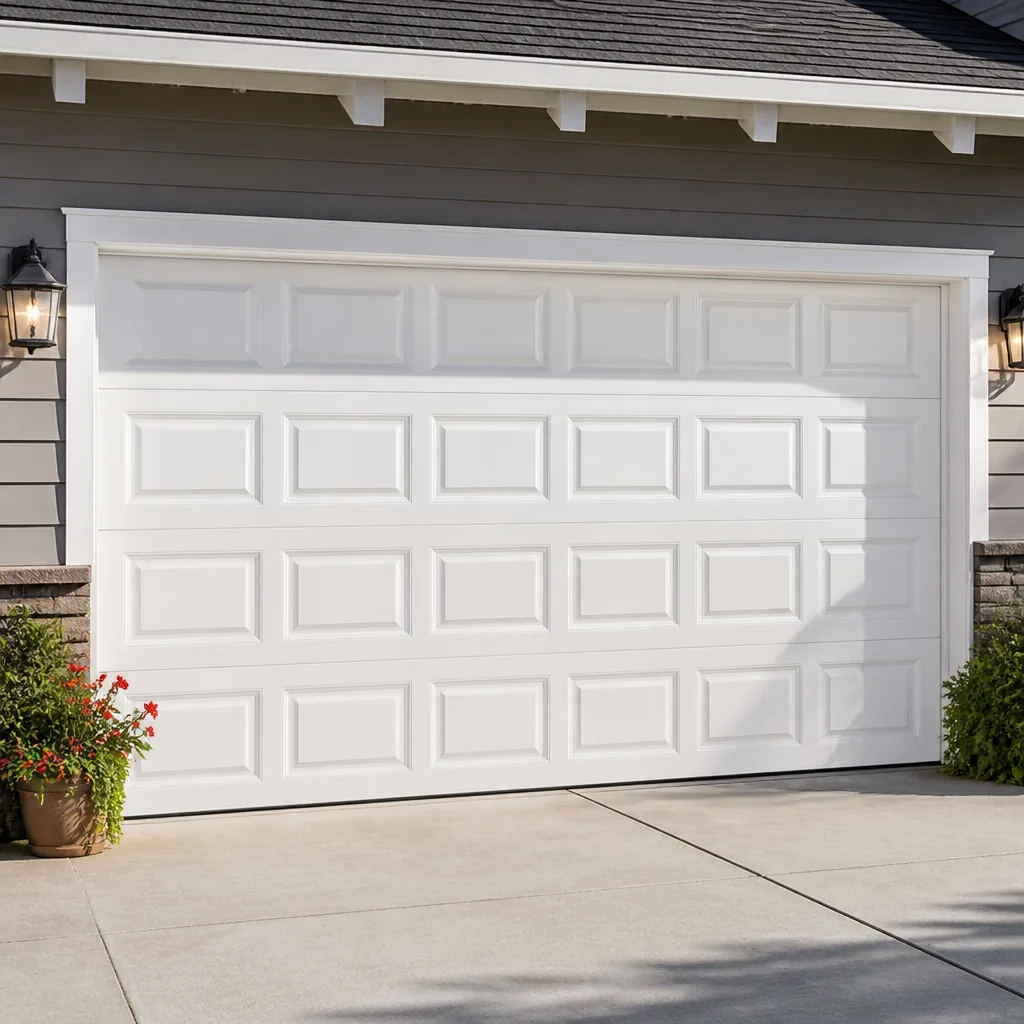 Raised-panel steel
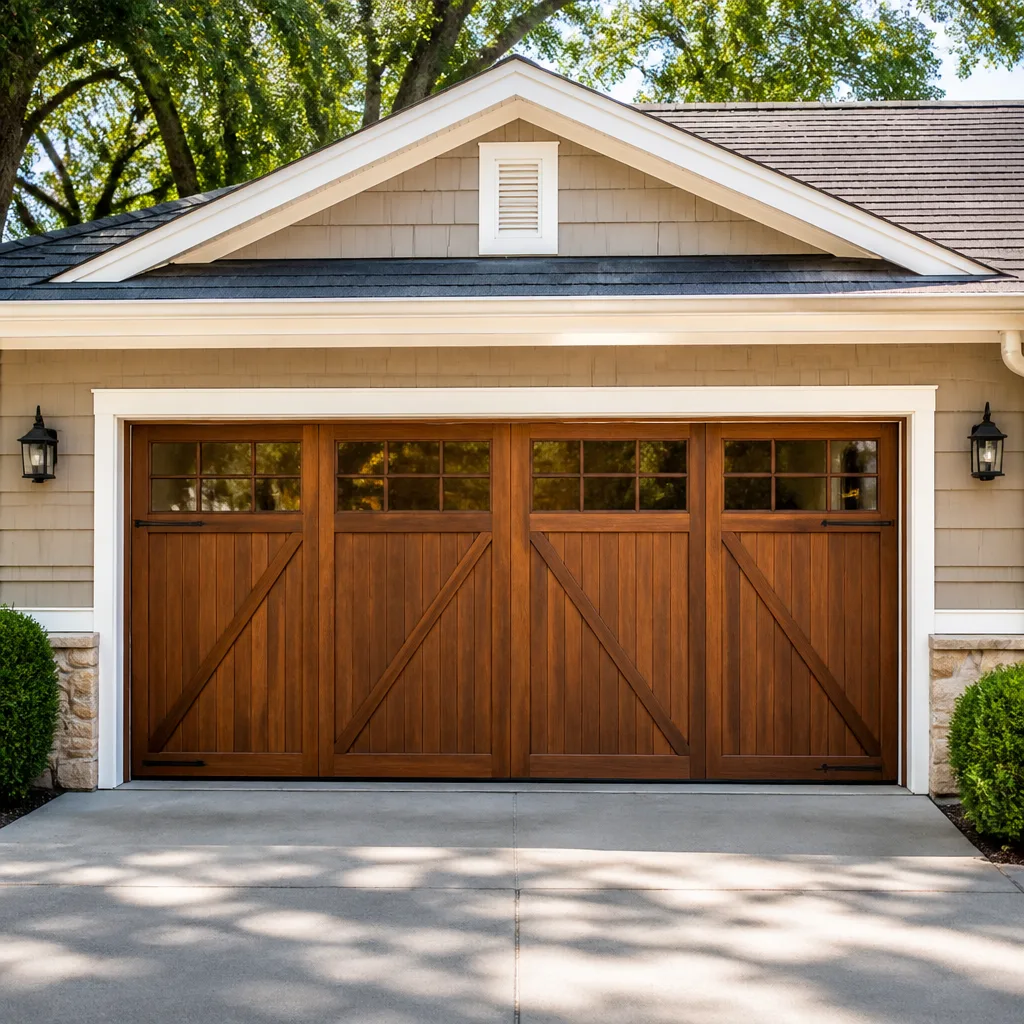 Carriage house
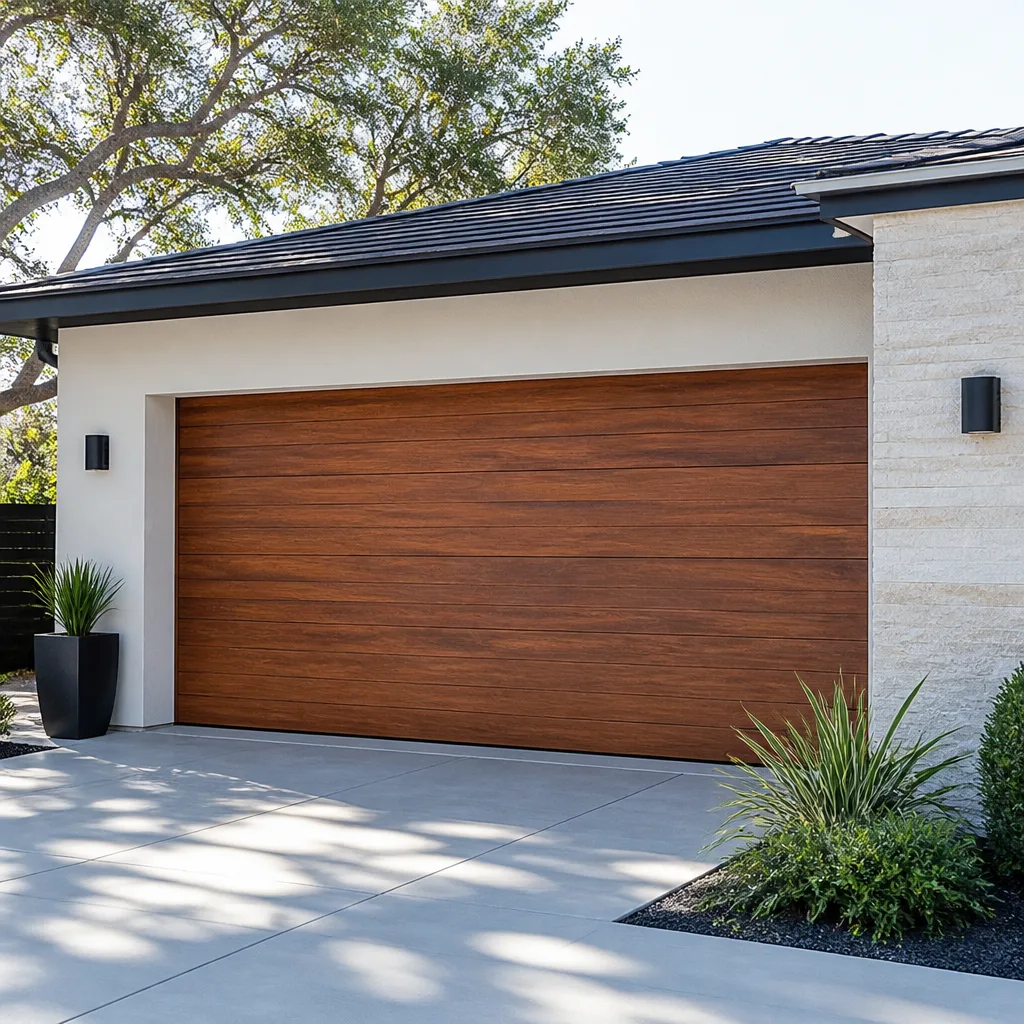 Modern flush
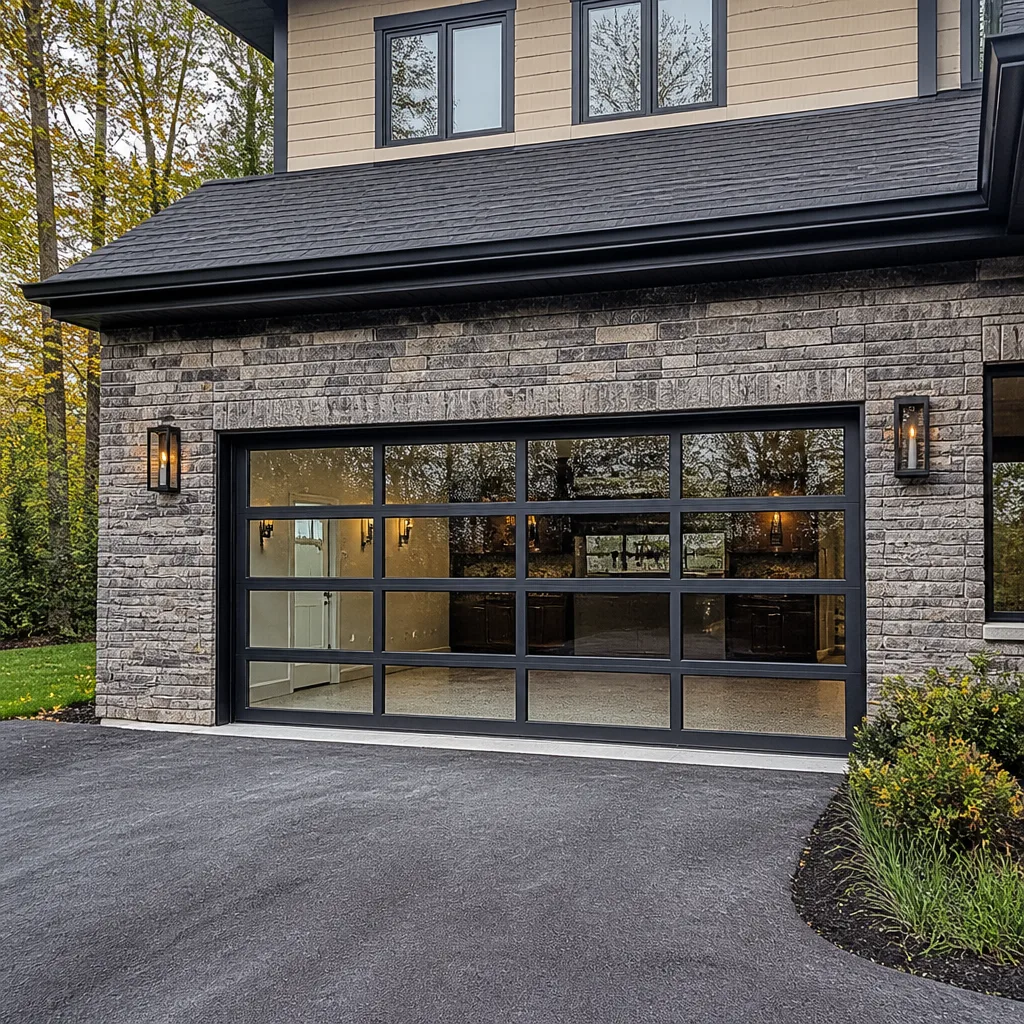 Full-view glass
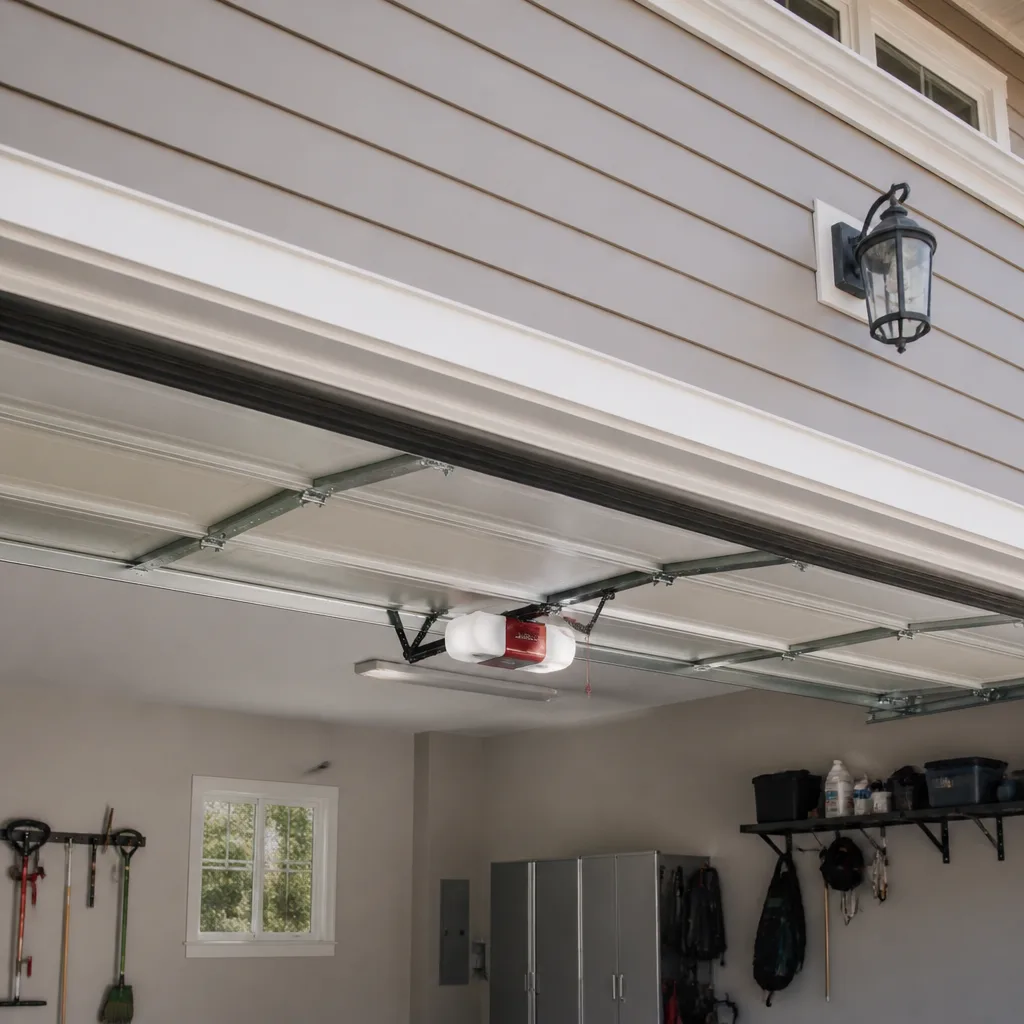 LiftMaster openers
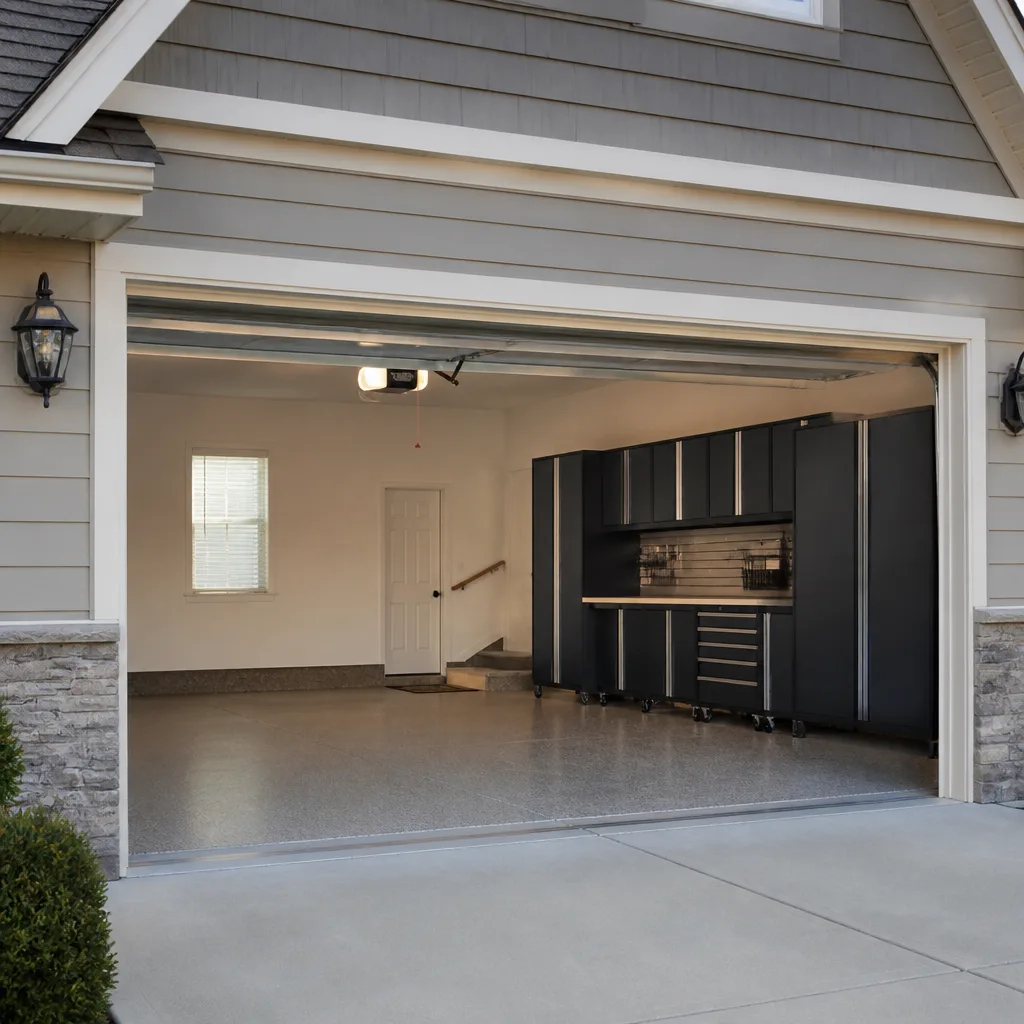 Chamberlain openers
Full 25-point door and opener safety check with every visit - springs, cables, rollers, tracks, and your LiftMaster or Chamberlain opener included
You get a price before we start. It does not change when the pro arrives.
Get your free estimateGarage Door Cost Breakdown: The Great Neck Homeowner’s Reference for 2026
The $700 garage door installation you see advertised almost never describes the job you actually have. That number assumes a perfect rough opening, a standard 7-foot door, and no hardware replacement – conditions that describe fewer than half of the jobs we’re called out to in an older Great Neck neighborhood, where a door from the 1980s or 1990s has usually taken its track, rollers and spring assembly along with it. What follows is a 2026 cost reference built from local labor rates and real scope, not national averages. You’ll get component-by-component ranges, the line items cheap quotes leave out, and a clear way to decide between repair and replacement in Great Neck.
Quick Answer
Garage door repair in Great Neck typically runs $150 to $650 depending on the component, with a single torsion spring repair at $180 to $340 and a new opener installed at $350 to $850. Full door replacement with a standard single-car door typically lands between $1,100 and $2,800 installed, and double-car doors run higher. The written estimate you receive after a measure is the final price – everything below is a planning range, not a quote.
Styles & brands we work with
- Raised-panel steel
- Carriage house
- Modern flush
- Full-view glass
- LiftMaster openers
- Chamberlain openers
Table of Contents
- Why National Averages Miss the Mark in Great Neck
- Component-by-Component Cost Ranges for 2026
- What Drives Labor Cost Variance in Great Neck
- The Hidden Costs Most Quotes Omit
- How to Read a Quote for Completeness
- Repair or Replace: The Decision Framework
- Spring Systems and Safety: What You Should Never Attempt
- Why Brand Familiarity Affects Your Final Bill
Why National Averages Miss the Mark in Great Neck
Most cost guides you’ll find online pull from a national sample that blends rural and urban markets, new construction and 40-year-old housing stock, single-car and custom carriage doors. The result is a number that’s wrong for almost everyone. In Great Neck, the housing stock skews older, which means the door and opener you’re pricing are usually original equipment or a mid-life replacement, not a clean new install.
Northern Virginia labor rates sit above the national median. Material delivery into Great Neck adds another layer – a door panel or full door section has to be ordered, shipped and handled, and that freight cost is baked into what a specialist quotes you. A big-box installer absorbs some of that by using a narrower product line; a dedicated garage door specialist orders the exact model that fits your opening.
There’s also the scope problem. National averages assume the job is what the label says. In practice, a spring replacement on a 20-year-old door often turns into springs, cables, rollers and a bearing plate because the rest of the assembly is at the same wear point. That’s not upselling – it’s what a technician finds when they open the assembly and see the cable frayed or the roller stems worn flat. In our experience, roughly half the spring calls we handle in Great Neck expand into a fuller hardware refresh once the door is on the ground and inspected.
Finally, timing matters. A scheduled job priced during a normal week costs less in labor than an emergency call where the door is stuck open and the house is exposed. If you’re pricing a repair because the door has already failed, factor that in before you compare quotes.
Component-by-Component Cost Ranges for 2026
Below are the typical installed ranges you should expect in the Great Neck market for 2026. These are estimates only – your written quote after inspection sets the final price. All figures assume a standard residential door and normal access.
| Component | Typical Low | Typical High | Notes |
|---|---|---|---|
| Torsion spring (single) | $180 | $340 | Matched pair usually replaced together – roughly double |
| Extension spring (single) | $150 | $300 | Pair pricing applies the same way |
| Cable replacement (per side) | $120 | $250 | Often paired with spring work |
| Roller set (full door) | $100 | $220 | Nylon rollers at the higher end |
| Section or panel replacement | $250 | $700 | Depends on panel size and model availability |
| Opener replacement (installed) | $350 | $850 | Chain drive at the low end, belt or Wi-Fi at the high end |
| Full single-car door installed | $1,100 | $2,800 | Includes track, hardware and haul-away in most quotes |
| Full double-car door installed | $1,900 | $4,200 | Custom and carriage styles run above this |
A word on springs: the range above is for one spring. Almost every door has a matched pair, and replacing one without the other is a short-lived fix – the older spring fails soon after. Budget for the pair when you plan the job, and confirm in the quote whether the price covers one or both.
For a specific repair price on your door, the fastest path is a garage door repair visit with a written estimate before anything is touched. Opener work has its own pricing structure, which you can read about under garage door opener repair.
What Drives Labor Cost Variance in Great Neck
Two doors of the same size and brand can carry labor quotes that differ by $200 or more. Here’s what actually moves the number.
Access complexity
Great Neck has a mix of attached garages, detached garages and homes where the garage sits at the end of a narrow drive or behind a tight turn. A detached garage with a low clearance header takes longer to work on than a clean two-car attached bay. If a technician has to remove shelving, a storage rack or a parked vehicle’s worth of clearance before the door can be lowered, that time is real and it shows up in the quote.
Existing hardware condition
A door that’s been lubricated and serviced periodically comes apart cleanly. A door with seized track bolts, rusted hinges and a stripped bottom bracket can add an hour to a job that should take 45 minutes. This is the single most common reason a quote comes in above the phone estimate once the technician is on site. Good companies tell you this upfront rather than surprising you at the end.
Job timing
A scheduled repair priced during a normal working day is the baseline. An emergency call – door stuck open, door stuck down, car trapped inside – carries an urgency premium because it displaces scheduled work. If you can wait for a scheduled visit, you’ll usually pay less. If you can’t, call and ask for emergency service and get the price confirmed before work begins.
Door and opener model
Standard 7-foot doors and common openers are straightforward. Oversized doors, low-headroom setups, high-lift track and older openers with discontinued parts all add labor. We work on LiftMaster, Chamberlain, Genie, Clopay, Amarr, Wayne Dalton, Craftsman and Raynor equipment, so the technician arrives already familiar with the hardware on your wall rather than diagnosing from scratch.
The Hidden Costs Most Quotes Omit
The gap between a low bid and a complete bid is usually made up of items the first quote simply left out. Here’s what should be accounted for in any honest Great Neck quote.
- Disposal and haul-away. An old door, a stack of worn panels or a dead opener has to go somewhere. Some quotes include removal; others bill it separately as a dump fee. Ask which.
- Permit costs. Many cities require a permit for structural changes to a garage opening or for certain replacement work. Costs vary by jurisdiction. Ask your city’s building department whether your job needs one, and ask the contractor whether the permit is included in the bid.
- After-hours or emergency surcharges. A job booked for a normal working day shouldn’t carry one. A job where the door has failed and needs immediate attention may. Confirm the surcharge in writing before dispatch.
- Hardware add-ons discovered on site. Worn rollers, a bent hinge or a frayed cable found during the job are legitimate additions – but they should be priced and approved before the technician proceeds.
- Freight on special-order panels. A non-standard color or a discontinued profile has to be ordered and shipped. That cost is real and should appear in the quote, not appear later on the invoice.
The rule that protects you: nothing gets added to the bill without your approval first. The price you agree to before work starts is the price you pay.
How to Read a Quote for Completeness
A suspiciously low bid isn’t a bargain – it’s an incomplete one. Use this checklist to compare quotes on equal footing.
- Confirm the scope in writing. The quote should state exactly what’s being replaced, repaired or installed, with model numbers where relevant.
- Check whether springs are priced as one or a pair. This is the most common source of confusion in garage door quotes. A “spring replacement” at $180 that turns into $360 at the invoice is a quote that should have been clearer.
- Look for disposal and haul-away. If it’s missing, assume it’s extra.
- Ask about the permit. Either the quote includes it or it explicitly states the homeowner is responsible. Silence on this point is a red flag.
- Confirm the labor warranty. A quote with no warranty language is a quote you can’t hold anyone to.
- Verify the price is fixed, not an estimate subject to change. A written quote should hold. If the scope changes because of what’s found on site, you should be told and asked before work continues.
- Check that the company is licensed and insured as the state requires. Ask for confirmation. A legitimate operator will provide it without hesitation.
When you’re ready to compare, we’ll put a written estimate in front of you before any work begins. See our garage door repair page for how a scheduled visit works, or call (877) 792-6350 to book a free estimate.
Repair or Replace: The Decision Framework
This is the question that saves Great Neck homeowners the most money, and the answer isn’t always obvious. A $400 repair on a door that’s structurally sound is money well spent. A $400 repair on a door that’s one season from replacement is money you’ll spend twice.
Here’s how to think through it.
Repair when:
- The door panels are straight, solid and free of rot or delamination.
- The track is true and the door runs level.
- The problem is mechanical – a spring, a cable, a roller, an opener – not structural.
- The door is less than about 15 years old and the hardware is in reasonable condition.
- The repair is a single component and the rest of the assembly is sound.
Replace when:
- Two or more panels are damaged, dented through or separating.
- The track is bent or the opening has shifted, so the door no longer runs true even after adjustment.
- You’re facing a second major repair within a short window – springs now, opener next season, panels after that.
- The door is original to a 1980s or 1990s home and the hardware is at end of life across the board.
- You want insulation, a quieter door or a different look, and the repair cost approaches a meaningful share of replacement.
A useful rule of thumb: if the repair cost climbs past roughly a third of what a new door would cost, and the door is already past its mid-life, replacement usually wins on total spend over the next several years. A full garage door installation also resets the clock on every component at once – springs, cables, rollers, track and hardware – rather than leaving you to replace them piecemeal.
Spring Systems and Safety: What You Should Never Attempt
Torsion and extension springs are under extreme tension at all times. A torsion spring holds enough stored energy to cause serious injury if it releases unexpectedly, and the winding bars and cables involved are not household tools. This is the one part of garage door work we tell every homeowner to leave alone.
What you can safely do is check for the warning signs:
- A loud bang from the garage followed by a door that won’t lift – a spring has likely failed.
- A visible gap in the torsion spring coil above the door.
- A door that lifts a few inches and stops, or feels extremely heavy.
- A door that hangs unevenly on one side.
- Frayed or kinked cables at the bottom corners.
If you see any of these, stop operating the door and call a trained technician. Don’t try to lift it manually to get the car out, and don’t attempt to adjust the spring or cable yourself. Spring repair is dangerous work – leave it to a trained technician. Our technicians have up to 15 years of experience with high-tension spring systems, and we treat spring work as a core service, not an add-on.
If the door is stuck open or stuck down and your home is exposed, call (877) 792-6350 for emergency service. We’re open Sunday through Friday, 7am to 7pm, and closed Saturday.
Why Brand Familiarity Affects Your Final Bill
A technician who works on one brand occasionally spends time figuring out the hardware. A technician who works on it weekly doesn’t. That difference shows up in labor time, and labor time is the biggest variable in your quote.
We service eight major brands – LiftMaster, Chamberlain, Genie, Clopay, Amarr, Wayne Dalton, Craftsman and Raynor – which means the technician arrives already familiar with the opener on your ceiling or the door panel profile on your opening. For a Clopay or Amarr door, that means knowing which panel profiles are still available and which require a special order. For a Craftsman or Genie opener, it means knowing the common failure points on older units before the diagnosis begins.
Brand familiarity also affects parts sourcing. A common Wayne Dalton or Chamberlain component is usually straightforward to obtain. A discontinued opener model may require a substitute part or a full opener replacement, and a technician who knows the line can tell you which path makes sense rather than ordering the wrong part and coming back.
For a full picture of how we approach the trade, see Great Neck Garage Door Repair Pros.
Common Mistakes to Avoid
- Comparing a one-spring quote to a two-spring quote. The numbers look different because the scope is different. Always confirm whether the price covers one spring or the pair before you compare.
- Choosing the lowest bid without reading the scope. A quote that omits disposal, the permit or a labor warranty isn’t cheaper – it’s incomplete, and the difference shows up at the invoice.
- Replacing a single spring on a matched pair. The older spring is at the same wear point and typically fails soon after. You’ll pay for the second visit either way.
- Assuming a national average applies to a Great Neck door. Local labor rates and material delivery into Northern Virginia push real costs above the national number, especially on older housing stock.
- Letting a door run on a bent track. A door that’s out of true puts stress on the springs, cables and opener every time it cycles. Fixing the track early is far cheaper than replacing the components it wears out.
- Trying to free a door with a broken spring by hand. The door can come down hard and the spring assembly is under dangerous tension. Call a technician instead.
- Skipping the written estimate. A verbal number that changes once the technician is on site leaves you with no recourse. Get the scope and price in writing before work starts.
See the difference
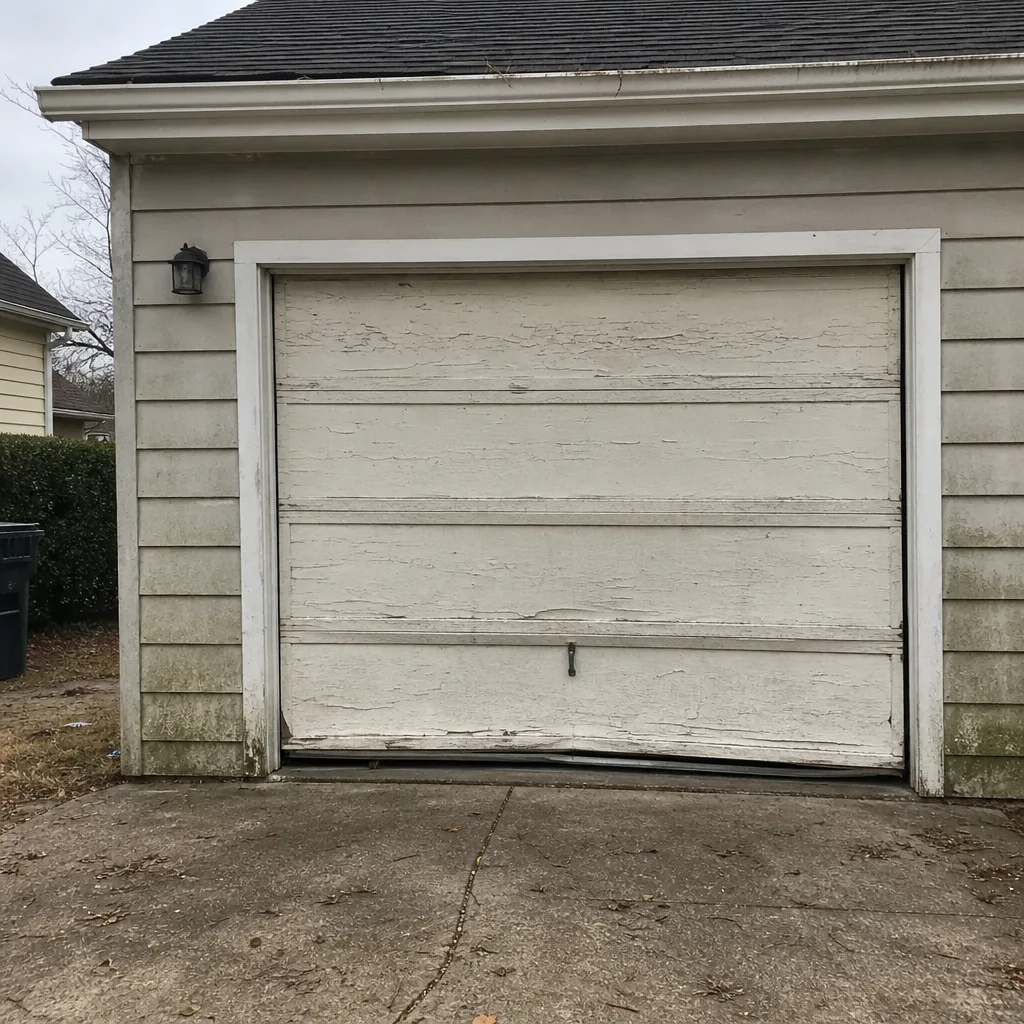 Before
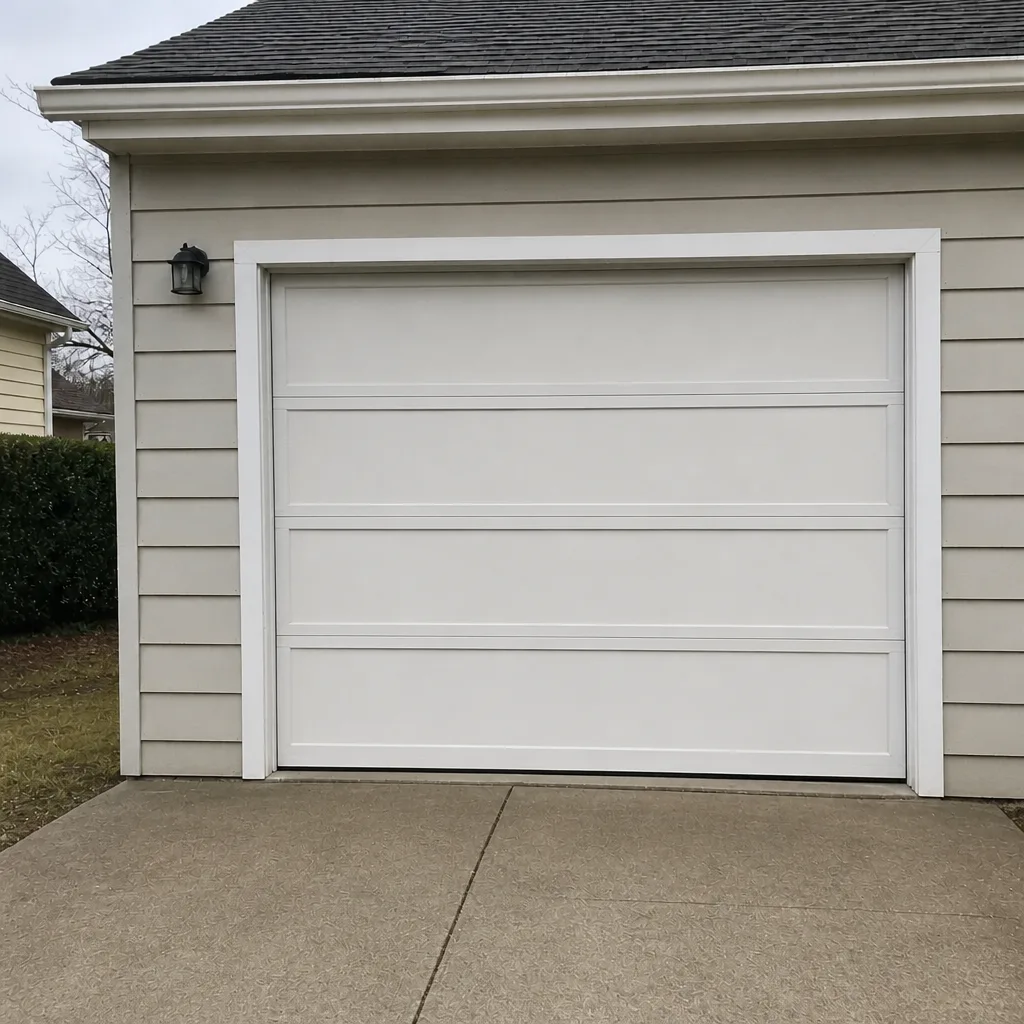 After
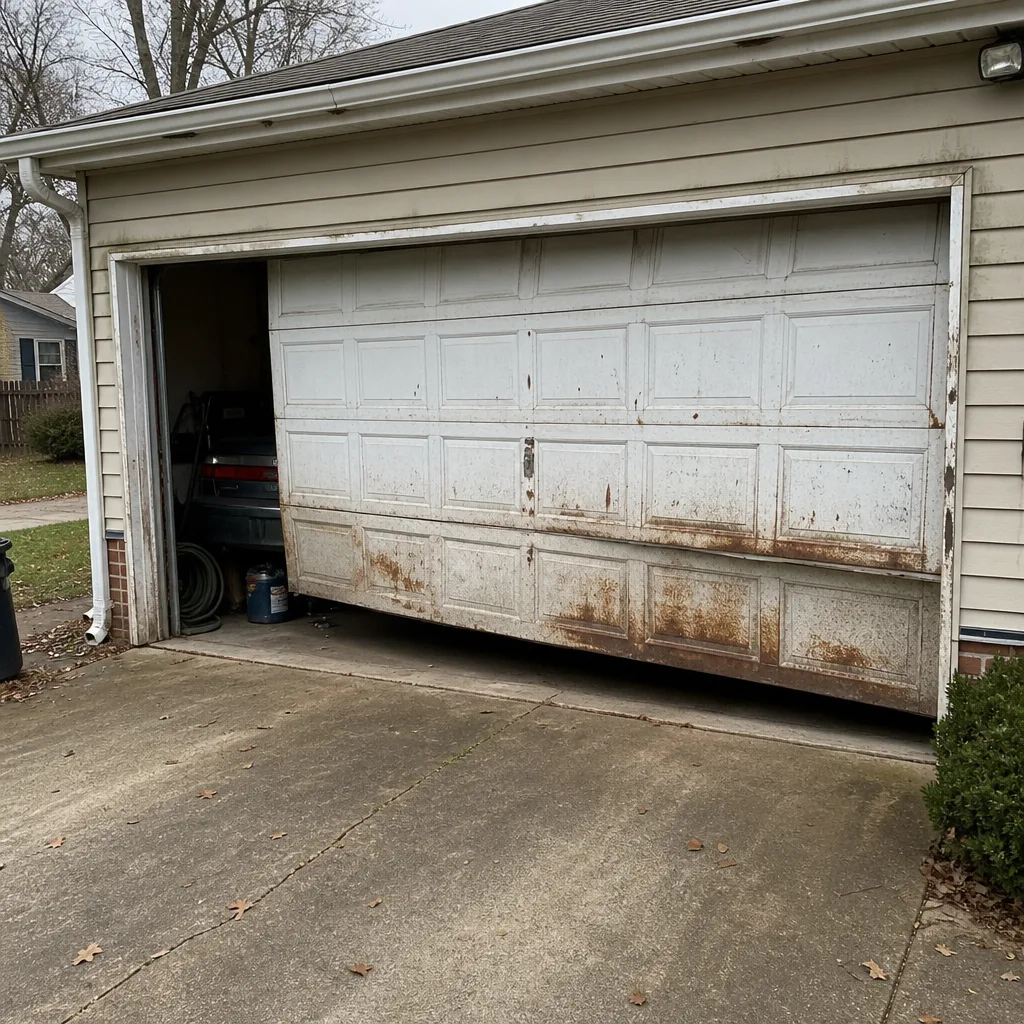 Before
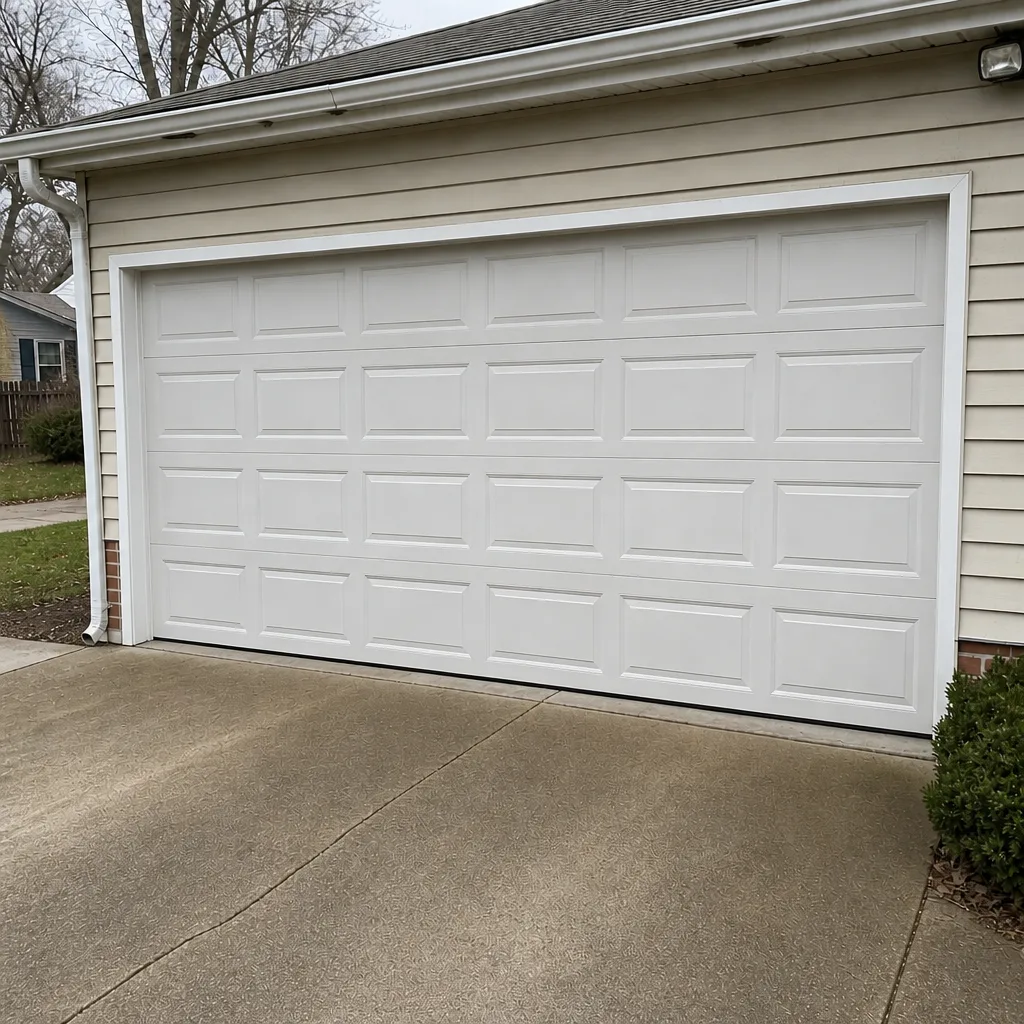 After
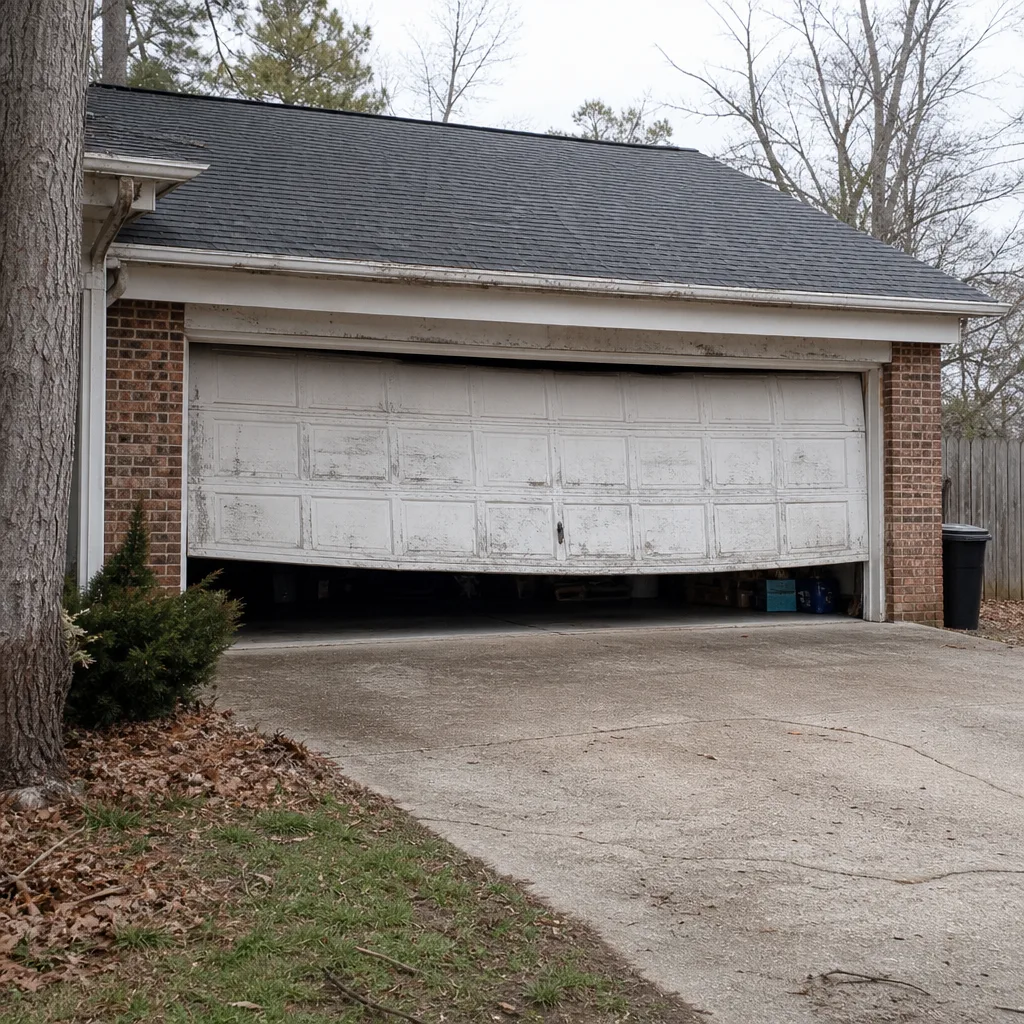 Before
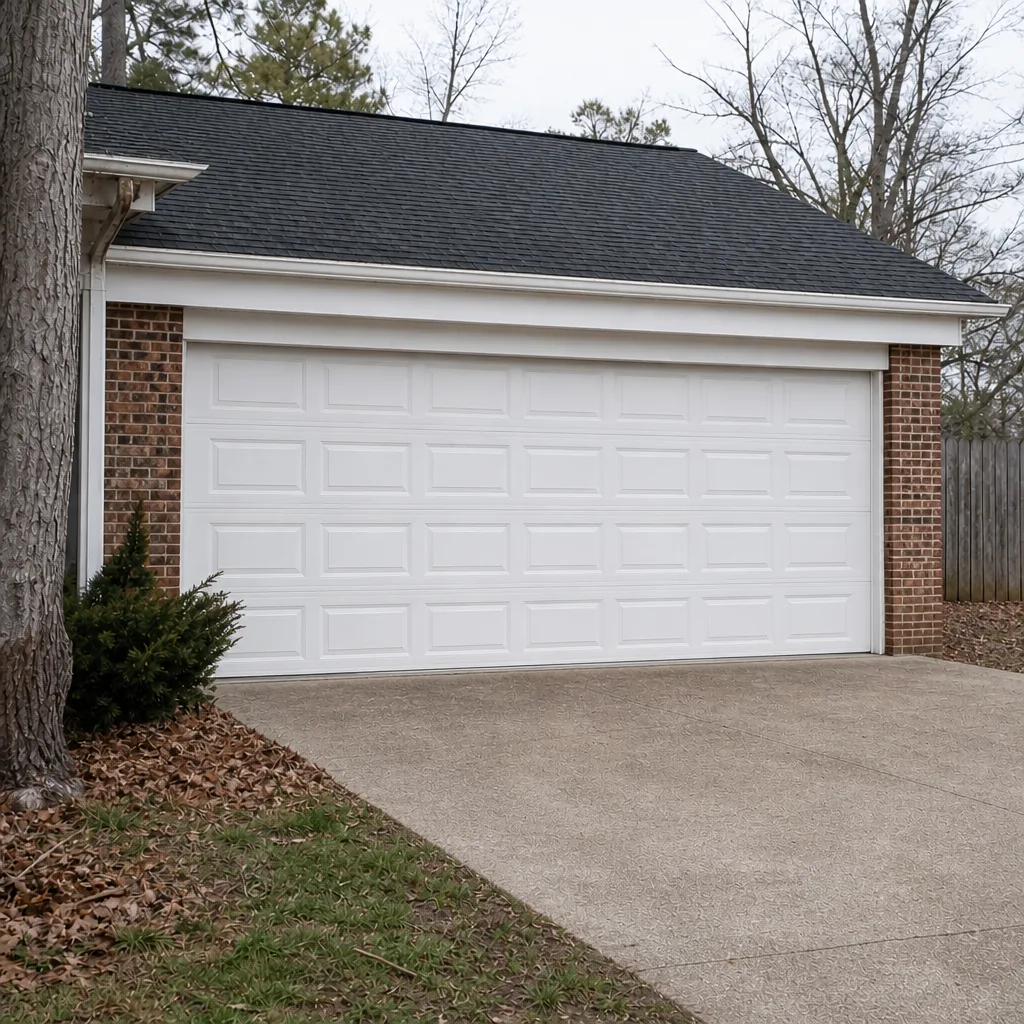 After
When to Call a Professional
Some jobs are obvious – a snapped spring, a door that won’t close, an opener that’s dead. Others are quieter: a door that’s getting heavier to lift, a grinding sound on the way up, a gap at the bottom that lets weather in, or a remote that only works from close range. Those are early signals that a component is wearing, and catching them before failure usually costs less than an emergency call.
Call a professional when the door is stuck, when you see a broken spring or a frayed cable, when the opener runs but the door doesn’t move, or when the door no longer sits level. Also call when you’re weighing repair against replacement – an on-site assessment gives you a real number rather than a guess. Great Neck Garage Door Repair Pros offers free estimates in Great Neck – call (877) 792-6350. We’re open Sunday through Friday, 7am to 7pm, and closed Saturday.
Frequently Asked Questions
Most garage door repairs in Great Neck run $150 to $650 in 2026, with a single torsion spring at $180 to $340 and an opener replacement at $350 to $850 installed. Full door replacement typically starts around $1,100 for a standard single-car door and runs to $2,800 or more. These are planning ranges – your written estimate sets the final price. Call (877) 792-6350 for an exact quote; estimates are free.
Yes – a door stuck open is a security issue, and we offer emergency service for urgent failures. Call (877) 792-6350 and we’ll confirm availability and the price before any work begins. We’re open Sunday through Friday, 7am to 7pm, and closed Saturday.
No – the price you agree to before work starts is the price you pay. If we find something on site that changes the scope, such as a worn cable or a bent hinge, we’ll tell you and get your approval before proceeding. Nothing gets added to the bill without your consent.
The local professionals we connect you with are licensed and insured as their state requires. We work exclusively on garage doors, so every technician’s tools and training are specific to the trade. Call (877) 792-6350 with any credential questions before booking.
Repair is cheaper when the door panels and track are sound and the problem is a single mechanical component. Replacement usually wins when two or more panels are damaged, the track is bent, or you’re facing a second major repair within a short window. A useful guide: if the repair cost approaches roughly a third of a new door and the door is past mid-life, replacement often costs less over the next several years. Call (877) 792-6350 for a free assessment.
We’re closed Saturday and open Sunday through Friday, 7am to 7pm. If your door fails on a Saturday, call and we’ll book you for Sunday. Emergencies during our open days are handled the same day where possible – call (877) 792-6350 to confirm.
The Bottom Line
Garage door costs in Great Neck are higher than national averages for real reasons: older housing stock, Northern Virginia labor rates, material delivery costs and the scope creep that comes with a door at end of life. Use the component ranges in this guide as a planning tool, not a quote. Insist on a written estimate that lists the scope, confirms whether springs are priced as one or a pair, includes disposal and addresses the permit. And when you’re weighing repair against replacement, look at the whole assembly rather than the single failed part. The price you agree to before work starts is the price you pay – call (877) 792-6350 for a free estimate in Great Neck.
Written by the team at Great Neck Garage Door Repair Pros.