Last updated November 21, 2026
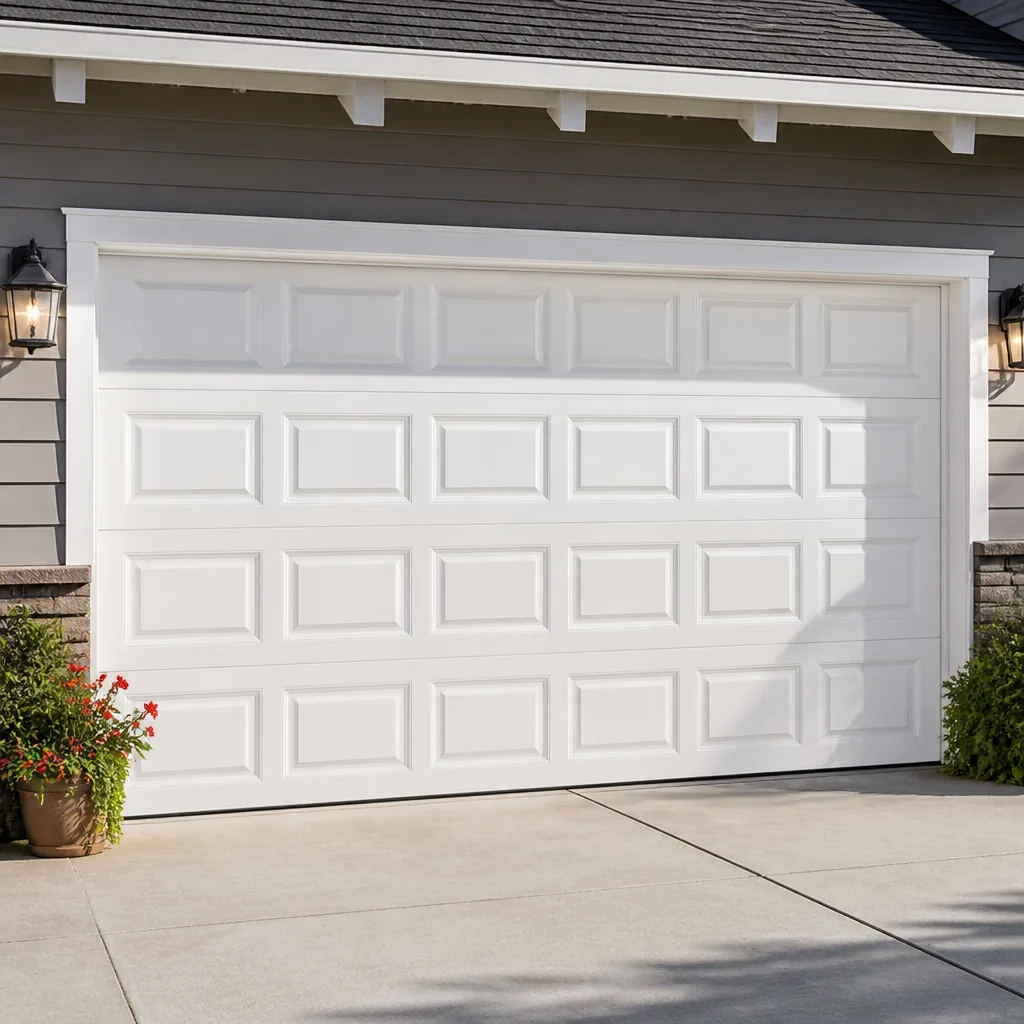 Raised-panel steel
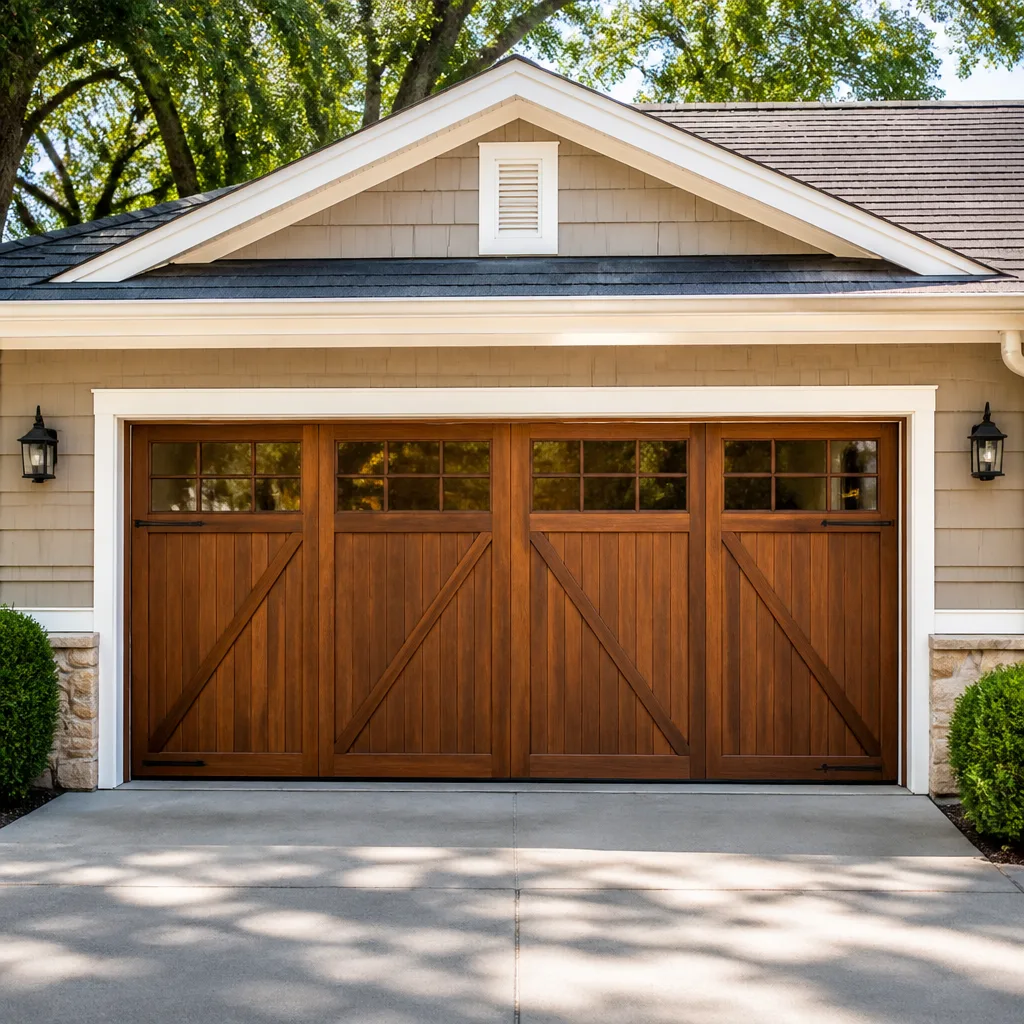 Carriage house
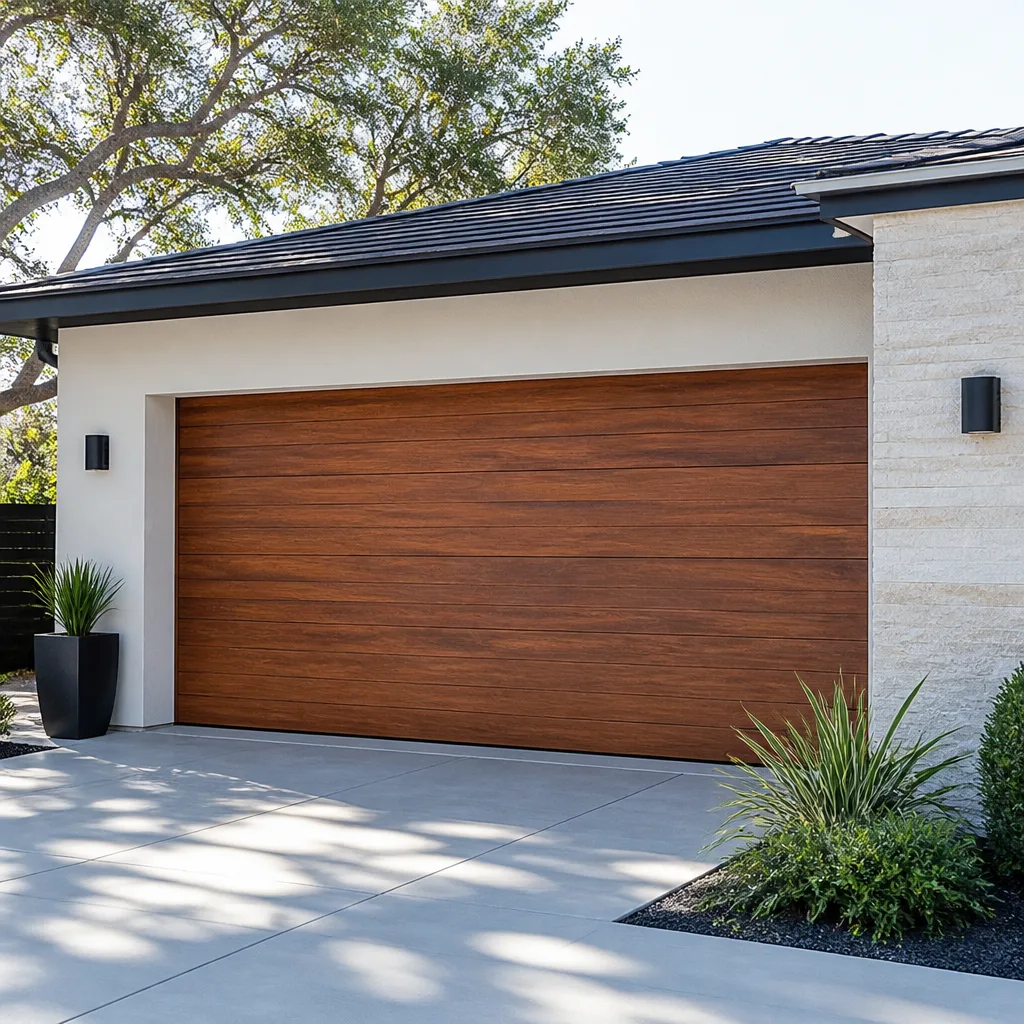 Modern flush
 Full-view glass
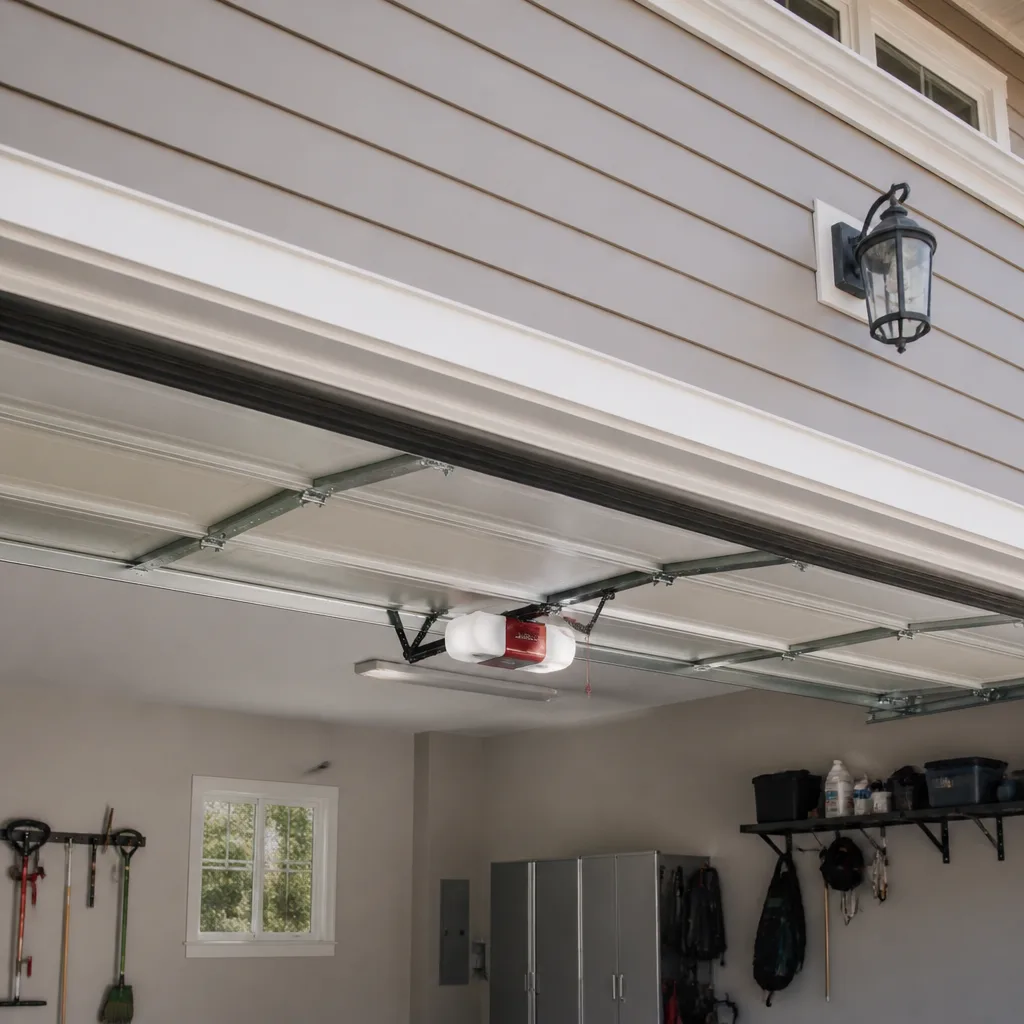 LiftMaster openers
 Chamberlain openers
Full 25-point door and opener safety check with every visit - springs, cables, rollers, tracks, and your LiftMaster or Chamberlain opener included
You get a price before we start. It does not change when the pro arrives.
Get your free estimateSeasonal Garage Door Care for Great Neck: Year-Round Homeowner’s Guide
Most garage door advice treats the year as four equal quarters and hands you a tidy checklist for each. That calendar doesn’t fit Great Neck. Here, the door spends two seasons under real stress and two seasons in a window where maintenance actually pays off. The hard stretch runs through the humid summer, then returns with the freeze-thaw swings of late winter. The gentle stretch is spring and fall, when the hardware is calm enough to inspect and adjust without fighting the weather. This guide lays out care tasks around that real pattern, the one we see across Great Neck homes, so you’re working with the climate instead of against it.
Quick Answer
Garage door care in Great Neck should follow two stress seasons and two maintenance windows, not a generic quarterly schedule. Do your inspection and lubrication work in fall before the cold sets in, check spring tension and seals going into late winter, and watch for humidity symptoms on wood-look panels and rubber seals through July and August. The high-risk periods for hardware failure are the humid summer and the freeze-thaw weeks of late winter, so that’s when a professional check matters most.
Styles & brands we work with
- Raised-panel steel
- Carriage house
- Modern flush
- Full-view glass
- LiftMaster openers
- Chamberlain openers
Table of Contents
- Why Great Neck Has Two Hard Seasons, Not Four
- Late Winter Freeze-Thaw: The Spring Failure Window
- Summer Humidity: What July Does to Panels, Seals, and Track
- Fall: The Best Maintenance Window of the Year
- Storm Prep for Great Neck: Bracing, Release Testing, Wind-Load Ratings
- A Month-by-Month Care Rhythm That Fits the Climate
- Common Mistakes to Avoid
- When to Call a Professional
- Frequently Asked Questions
Why Great Neck Has Two Hard Seasons, Not Four
Ask most homeowners what stresses a garage door and they’ll guess summer heat alone. In Great Neck, that’s only half the picture. The door is a big piece of moving metal and rubber, with steel springs under constant load, and it responds to temperature and moisture in ways that a simple seasonal chart misses.
Our technicians have up to 15 years of experience working on Great Neck doors, and the rhythm is consistent. Two periods do the real damage:
- The humid summer. Moisture in the air swells wood-composite panels, softens rubber bottom seals, and works at the bare spots on metal track and hardware. Doors start to bind, squeal, or fail to sit flush against the floor.
- The freeze-thaw window of late winter. Temperatures swing above and below freezing, steel contracts and expands, and the springs that carry the door’s weight take the brunt. This is when spring failure clusters.
The other two seasons, spring and fall, are when the hardware is at its calmest. That makes them the practical windows for inspection, lubrication, and adjustment. A door serviced in October goes into the hard winter in better shape; a door ignored until March tends to need repair rather than maintenance.
This is the core idea of this guide, and it’s why we organize the tasks the way we do. Great Neck homes with attached garages, and the property managers who look after them, get more life out of their hardware by matching the work to the actual weather rather than a printed four-part checklist.
Late Winter Freeze-Thaw: The Spring Failure Window
The single most damaging period for garage door springs in Great Neck is the late-winter stretch when temperatures cross the freezing line again and again. The cause is physics, not bad luck. Torsion springs are steel wire wound under heavy tension, and steel changes length as it warms and cools. Every swing above and below freezing cycles that tension, and a spring already near the end of its fatigue life has less margin to absorb it.
That’s why a door that opened fine through the holidays can suddenly snap a spring in late February or March. It isn’t random. The stress built up over a hundred small temperature cycles.
What to check before the freeze-thaw window
- Listen as the door moves. A sharp bang, a screech, or a door that suddenly feels heavier on the manual release are all warning signs worth a professional look before the worst of the cold.
- Watch the balance. Disconnect the opener and lift the door halfway by hand. If it won’t hold there, the spring is no longer doing its share of the work.
- Look at the springs themselves. A visible gap in a torsion spring, or a stretched extension spring, means it has already failed and shouldn’t be operated.
- Check the gap at the floor. A door that no longer meets the ground evenly in cold weather is straining one side against the other.
One caution that matters more than any checklist: spring repair is dangerous work – leave it to a trained technician. High-tension torsion springs store enough energy to cause serious injury, and the tools and technique required aren’t things to improvise. A tensioning check tells you whether to call; it is not an invitation to adjust the spring yourself. When a spring lets go in Great Neck, the fix is a trained repair, and our team treats it as a core service rather than an afterthought. If you suspect a spring problem, garage door repair can have it assessed and the door back in service today.
Summer Humidity: What July Does to Panels, Seals, and Track
By July, the humid air over Great Neck starts to show in three predictable places on a garage door. None of them announce themselves loudly. They show up as small symptoms that, left alone, turn into a stuck or misaligned door by late summer.
Wood-composite panels
Doors with a wood-look composite skin – common on Clopay and Amarr designs – absorb ambient moisture at the panel edges and joints. Watch for swelling around the seams, a panel that looks slightly bowed, or paint that begins to bubble along the bottom rail. Swollen panels can drag on the track and throw the door out of alignment.
Rubber bottom seals
The bottom seal is the flexible strip that keeps weather and pests out. Heat and humidity make it tacky and prone to sticking to the floor. When it sticks, the opener pulls against it, and over weeks that strain adds up. A seal that’s cracked, torn, or leaving daylight under the closed door needs replacing before it starts tearing at the door itself.
Metal track alignment
Humidity isn’t the only summer factor – heat expansion plays a role too. As the metal track and the door panels expand at slightly different rates, rollers can start to bind or jump. If you hear a rhythmic clunk or the door shudders on its way up, that’s a track and roller issue, not a finicky opener. Track straightening is fiddly work and easy to make worse; it’s a job for a technician with the right gauges.
The pattern to remember is simple. A symptom you notice in July – a seal that sticks, a track that binds, a panel that swells – rarely stays small through August. Catching it early is cheaper than repairing a door that’s been fighting its own track for six weeks. For doors that need adjustment or hardware swapped, our garage door opener repair team can diagnose whether it’s the opener or the door itself.
Fall: The Best Maintenance Window of the Year
Fall is the season that pays for itself. The hardware is relaxed, the weather is mild, and there’s still time to fix small problems before the cold makes them expensive. In Great Neck, October is the window we’d pick if we could only service a door once a year.
Here’s the task list that extends hardware life through winter, in the order it makes sense:
- Lubricate the moving parts. Apply a garage-door-specific lubricant to the rollers, hinges, and torsion spring (not the track itself – clean the track instead). This reduces friction and the load on the opener.
- Inspect hinges and rollers. Look for cracked hinges, worn roller bearings, and bent roller stems. Replace anything that looks tired before it seizes.
- Test the balance by hand. Disconnect the opener, lift the door to halfway, and check that it holds. A door that drifts down needs spring attention before winter.
- Check the safety reverse. Place a small object in the door’s path and confirm it reverses on contact. This is a safety function, not a convenience.
- Seal the gaps. Replace worn weatherstripping around the door edges and the bottom seal, so cold air and moisture stay out of the garage.
- Clear the track. Wipe the track clean of debris and check that it’s straight and level – especially if the door has been bumping through the summer.
A door that gets this treatment in fall tends to sail through the freeze-thaw season with far fewer calls to a repair service. The maintenance takes an hour or two, and it’s the single best investment of time a Great Neck homeowner can make in their door. A free estimate from our team in Great Neck covers anything the checklist turns up that needs a technician.
Storm Prep for Great Neck: Bracing, Release Testing, Wind-Load Ratings
Great Neck sits near the Chesapeake Bay corridor, and that means storm season deserves its own section in this guide. A garage door is the largest opening in most houses, and if wind forces it open or off its track, the consequences reach well past the garage itself.
Manual release testing
Every garage door has a manual release cord or handle that disconnects the opener from the door. During a power outage, that’s how you get the door open or closed. Test it before storm season: pull the release, move the door by hand, then reconnect it and operate it normally. A release that’s stuck or a door that won’t reconnect is something you want to discover in calm weather, not during an outage. If you’re not sure what brand you have, our LiftMaster and Chamberlain experience covers the majority of residential openers in this area, and we work on the door you already have.
Bracing and reinforcement
If your door has a wind-load rating, it came with specific reinforcement – struts, brackets, and hinges – designed to hold under high wind. Check that the bracing is still fastened and that no panel has cracked or loosened over the season. A missing strut or a loose bracket reduces the door’s real-world wind capacity, regardless of its rating.
What a wind-load rating actually means
A wind-load rating is a tested estimate of the pressure the door can withstand without structural failure, usually tied to a design wind speed for the region. It’s not a guarantee against every storm. A door rated for high wind still needs its bracing in place and its panels intact to perform to that rating. If a storm is forecast and your door shows any sagging, cracking, or loose hardware, treat it as weaker than the label suggests.
Storm-day checklist
- Close and lock the door well before winds pick up.
- Confirm the bottom seal makes full contact so wind can’t get a grip under the door.
- Clear anything loose from inside the garage that could become a projectile.
- Take photos of the door and its bracing, so you have a record if you need to document storm damage later.
If storm damage does happen – a bent panel, a track knocked out of alignment, or a door stuck open or down – that’s an urgent situation. Great Neck Garage Door Repair Pros offers emergency service for exactly these cases, and a door that won’t close is a security problem as much as a convenience problem.
A Month-by-Month Care Rhythm That Fits the Climate
Here’s how the seasonal tasks line up through the year for a Great Neck door. You don’t have to do everything on schedule, but this rhythm keeps the work where it does the most good.
Spring (March – May)
- Recover from the freeze-thaw season: have a technician check spring tension and replace any spring that failed over winter.
- Clear sand and road grit from the track and lubricate the rollers and hinges.
- Inspect door panels for damage from the winter’s ice and wind.
Summer (June – August)
- Watch for wooden-panel swelling and rubber seals sticking to the floor.
- Listen for track binding and rhythmic clunking as metal expands.
- Keep the track clean; don’t lubricate it – debris causes binding, not friction.
Fall (September – November)
- Run the full autumn maintenance list above – this is the most valuable window of the year.
- Replace weatherstripping and bottom seals before the cold sets in.
- Test the manual release and safety reverse one more time.
Winter (December – February)
- Keep the track clear of ice and snow buildup at the floor.
- Watch for spring warning signs as freeze-thaw begins – a heavier door, a bang, a gap at the bottom.
- Call for a spring assessment early, before the coldest stretch, rather than after a failure.
If a month gets away from you, fall and late winter are the two to protect. Everything else is recoverable. A full check in late fall and an early look in late winter will keep a Great Neck door running through the rest of the year without drama.
The Role of Lubricants, Coatings, and Corrosion
Doors in Great Neck face a mix of humidity and coastal proximity that’s harder on metal than inland air. Add the Chesapeake Bay corridor’s moisture and seasonal temperature swings, and bare metal on the springs, hinges, and brackets starts to show surface rust faster than you’d expect. You’ll notice it in the joints and at the fasteners before anywhere else.
The good news: this is one of the easier things to manage. Three practices make the most difference:
- Use a garage-door-specific lubricant. A white lithium or dedicated door lubricant resists humidity better than generic oil and won’t attract grit the way sticky lubricants do. Apply it to rollers, hinges, and the torsion spring – not to the track.
- Clean and dry metal before lubricating. Lubricant over surface rust traps moisture. Wipe the part down and dry it first.
- Touch up bare metal. A small rust spot on a hinge or bracket is worth a coat of resistant paint or a corrosion-inhibiting spray. Left alone, it expands into something that seizes.
If your door has wood-composite panels, keep up with the paint or finish on the bottom rail and edges, where moisture collects. A Raynor or Craftsman door with a worn bottom finish will absorb moisture faster than one that’s sealed. Re-coating in the fall, before the wet season, protects the panels through the humid months.
Rust and corrosion work slowly, but they work. A door that’s been neglected for years in this climate can end up with seized hinges and a binding track that no amount of oil fixes. That’s when a technician should look at it, and sometimes it’s the moment to weigh repair against a new door entirely.
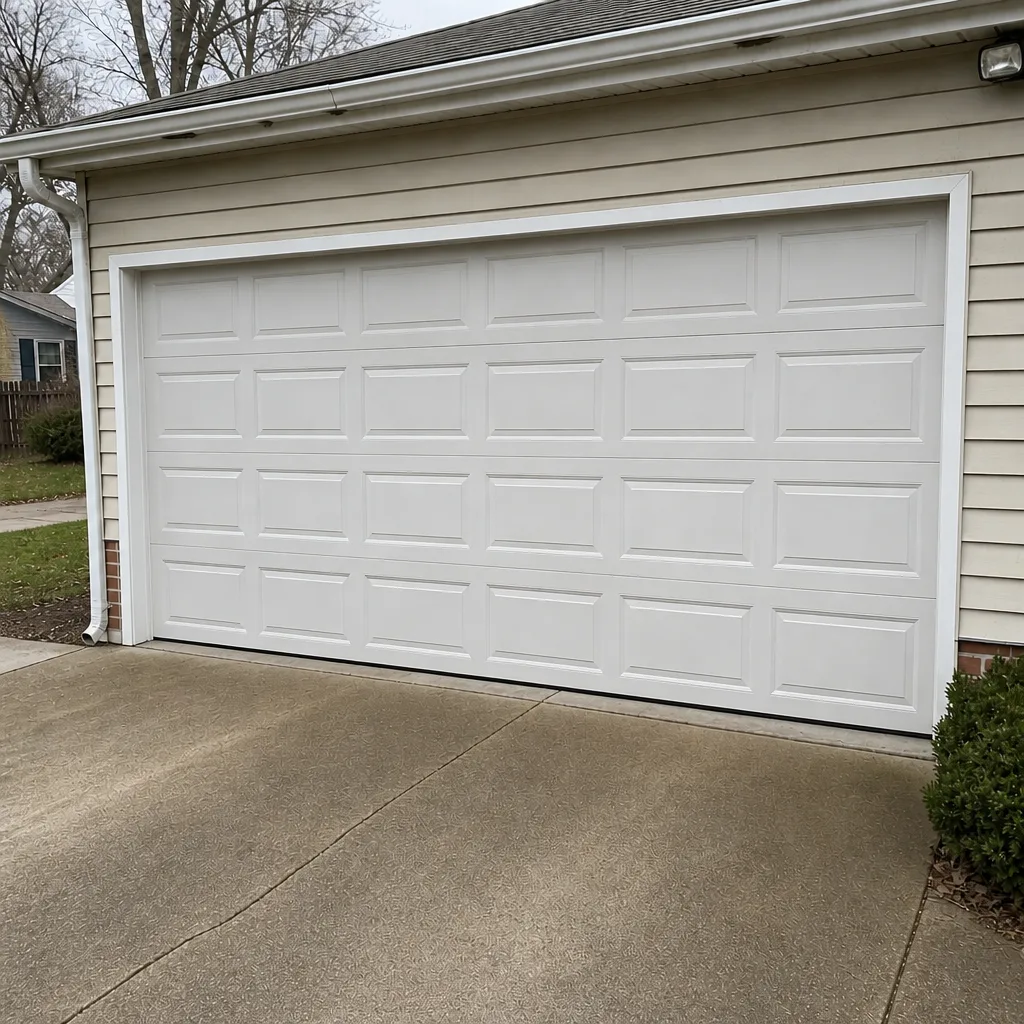
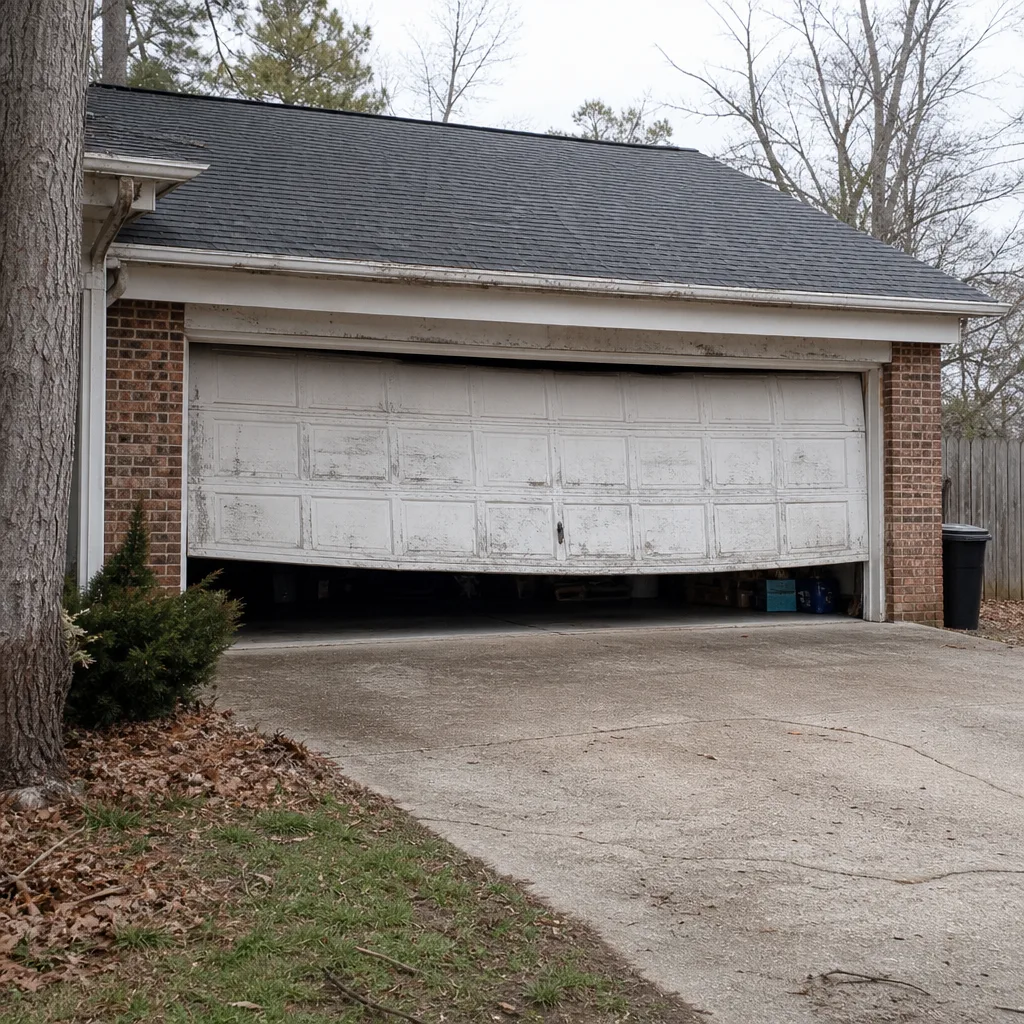
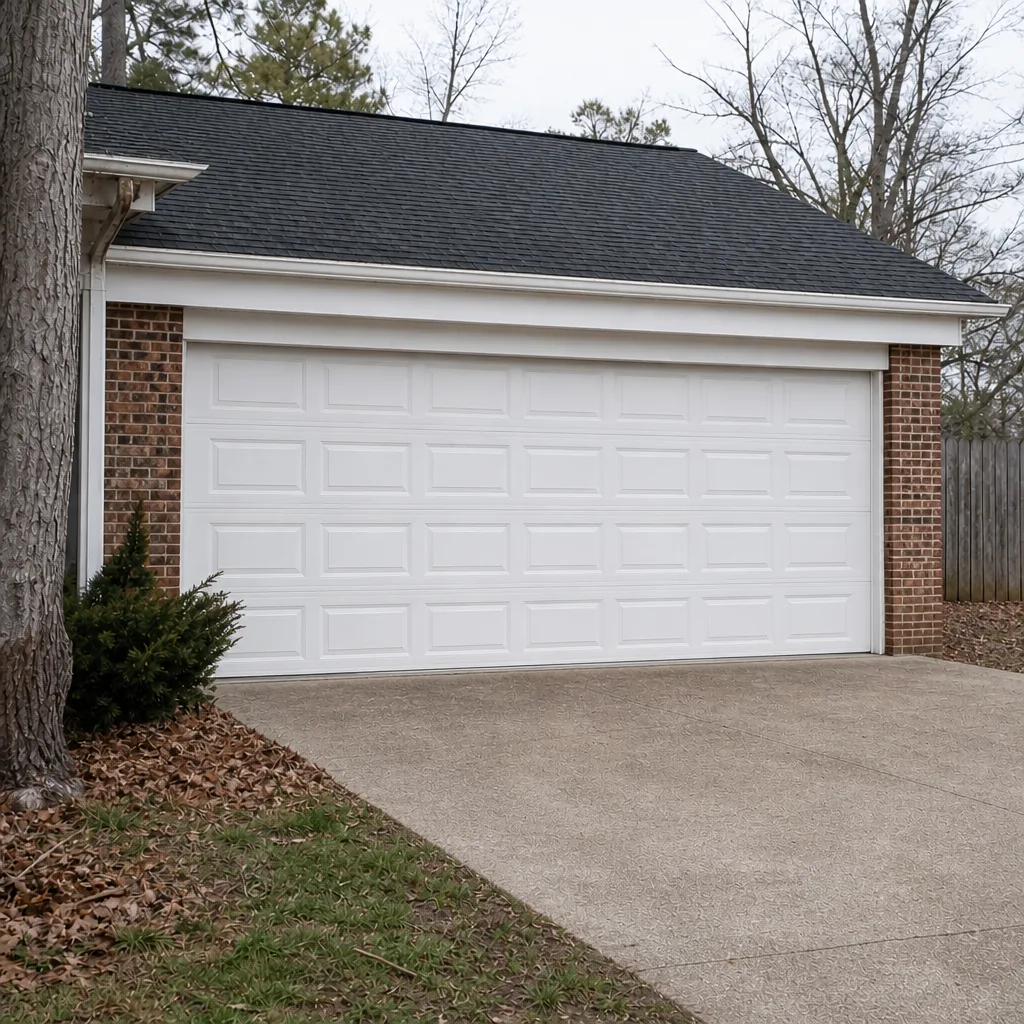
See the difference
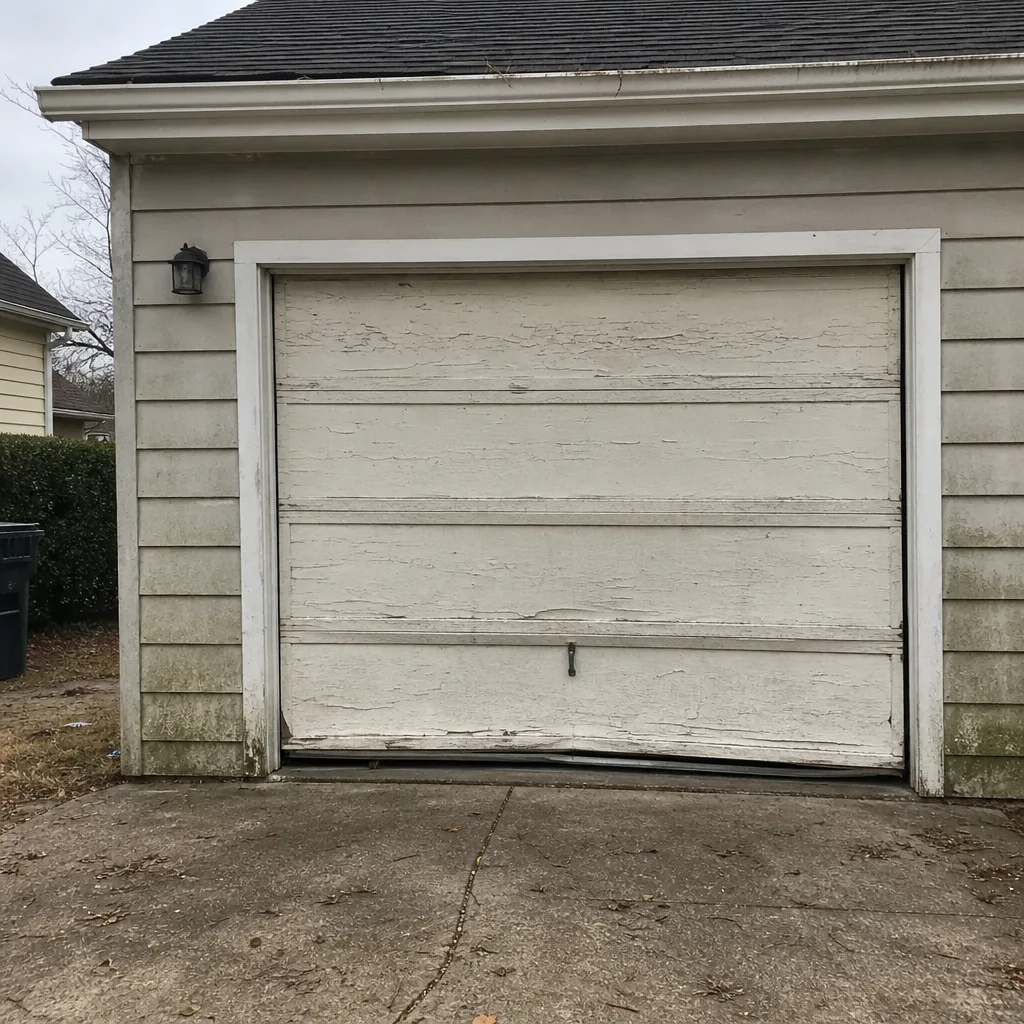 Before
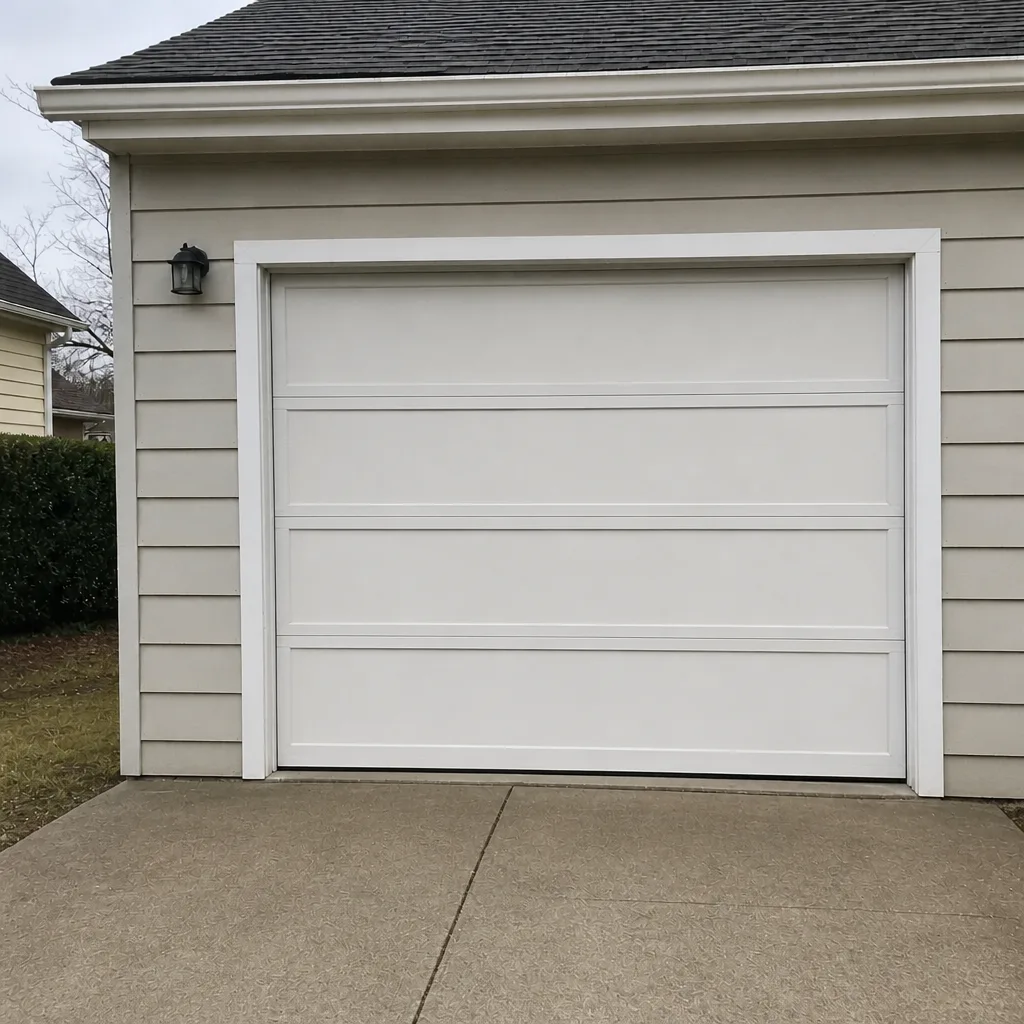 After
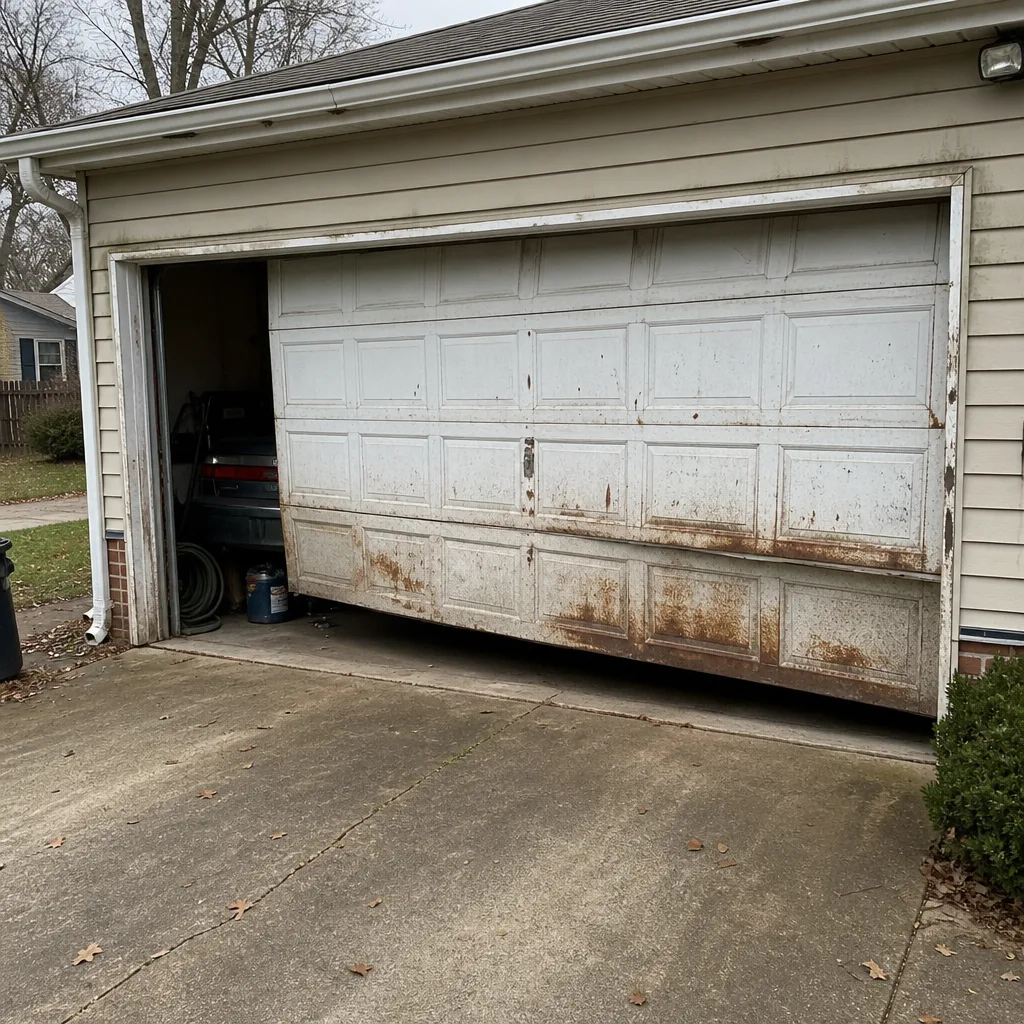 Before
 After
 Before
 After
Repair or Replace? A Seasonal Decision
The seasonal care schedule will bring you to a fork eventually: keep repairing the door you have, or install a new one. In Great Neck, that’s a decision worth making in the maintenance windows, not in the middle of a failure.
Repair usually makes sense when the door structure is sound and the problems are localized – a worn spring, a failing opener, a seal, or a hinge. These are hardware and parts failures, and they’re what a garage door installation estimate would sidestep only if the panels were also gone. If the door is denting, sagging, or showing rot at the bottom rail, the panel work can exceed the value of the door.
Installation is worth considering when:
- The door has repeated spring failures despite regular servicing.
- Panels are cracked, dented, or water-damaged across several sections.
- The opener is an older unit that no longer matches the door’s weight, or a modern Wi-Fi-enabled opener would serve better.
- You’re replacing an aging or storm-damaged door and want a wind-rated model with proper bracing.
New installation is measured, ordered, and scheduled, not done in a day. That’s a different kind of timeline than a repair call, and we plan for it that way. A proper measure and a written price come first, so the door you get matches what’s on your house today.
Common Mistakes to Avoid
- Treating the year as four equal quarters. Generic quarterly checklists put the heavy work in summer, when the door is already stressed. Match your effort to the fall and late-winter windows and you’ll get more life from the hardware.
- Attempting spring work yourself. High-tension springs hold enough energy to cause serious injury. Adjusting or replacing one is a trained technician’s job – a visual check is all a homeowner should do.
- Lubricating the track. Oil on the track collects grit and makes the door bind. Clean the track dry and lubricate the rollers and hinges instead.
- Ignoring summer seal sticking. A rubber seal that sticks to the floor in July strains the opener every time the door moves. Replacing it early prevents wear on the whole system.
- Waiting for a spring bang before booking a check. By late winter in Great Neck, the warning signs are usually already there. An early tension check catches a failing spring before it breaks.
- Skipping the manual release test. The release you never test is the one that fails during a storm outage. Test it in calm weather so you know it works.
- Assuming a wind-load rating guarantees storm safety. The rating only holds while the bracing is fastened and the panels are intact. Inspect the struts and brackets before storm season.
When to Call a Professional
Some jobs are true maintenance and some are true repair. Call a professional when the issue touches the springs, the opener electronics, the track alignment, or anything structural. A binding track, a door that won’t balance on the manual release, a spring with a visible gap, an opener that stops partway up – these are all signs a trained technician should be the one on the ladder. If the door won’t close and your home is open to the street, that’s a security issue and it’s worth an urgent call. Great Neck Garage Door Repair Pros offers free estimates in Great Neck – call (877) 792-6350. Our technicians have up to 15 years of experience, work on the major brands in this area, and quote a written price before any work begins.
Frequently Asked Questions
Once in the fall and once in late winter is the practical rhythm for Great Neck homes. The fall visit happens before the humid summer and cold winter stress, and the late-winter visit catches spring problems before they fail. A door that’s under heavy daily use may want a mid-summer seal and track check as well. Call us for a free estimate if you’re not sure where to start.
Yes, and the reason is temperature cycling rather than the cold itself. In late winter, temperatures swing above and below freezing repeatedly, and the steel in a torsion spring expands and contracts with each swing. That cycling works a fatigued spring harder, which is why failures cluster in that window. If your door suddenly feels heavy or you hear a bang, stop using it and call (877) 792-6350 – estimates are free.
Yes – it mostly shows on wood-composite panels, rubber bottom seals, and metal track. Panels swell at the joints and rail, seals turn tacky and stick to the floor, and track can bind as the door panels expand. Catch the symptoms in July and the fix is small. Ignore them until September and you may be looking at track straightening or panel repair. Call us to have a technician check the door before the humidity settles in.
Test the manual release, confirm the bottom seal makes full contact, and check that the wind-rated bracing and brackets are still fastened. A door’s wind-load rating only holds while the reinforcement is in place and the panels are intact. If you’re unsure about the bracing or the door has storm damage, call us for an inspection – emergency service is available when a door is stuck open or down. Call (877) 792-6350 for a free estimate.
No – the written price you agree to is the price you pay. We look at the door, confirm what’s needed, and quote a defined range before any work begins, so there are no surprises on the invoice. For spring work, the estimate is for the actual spring count on your door, not a generic number. Call (877) 792-6350 to get an exact quote – estimates are free.
In most cases yes. We service equipment from LiftMaster, Chamberlain, Genie, Clopay, Amarr, Wayne Dalton, Craftsman, and Raynor, which covers most of the residential doors in the Great Neck area. If you’re not sure what brand you have, tell the phone staff what’s stamped on the opener or the door panel, or send a photo. Call (877) 792-6350 for a free estimate and we’ll confirm the brand and the fix before anyone comes out.
The Bottom Line
Seasonal garage door care in Great Neck isn’t about four identical quarters – it’s about protecting the door through the humid summer and the freeze-thaw window of late winter, and getting the heavy maintenance done in the fall when it lasts. The single most valuable habit is a fall inspection: lubricate the moving parts, check the balance, seal the gaps, and test the safety reverse before the cold arrives. The second is an early spring tension check, before a fatigued spring fails. Handle those two and the rest of the year mostly takes care of itself. Everything else is a repair, and that’s the point at which a trained technician should be the one on the door.
The first place to start is a proper look at the door you have. Great Neck Garage Door Repair Pros works on the door you already own, from opener diagnostics to spring repair to full installation. If you’re planning a seasonal check, replacing a seal, or facing a spring that let go over winter, get a free estimate and a written price before any work starts. Call (877) 792-6350 and we’ll book you for the next available slot, with emergency service available when the door won’t close.
Written by the team at Great Neck Garage Door Repair Pros.